Basics course · Lesson 15 · Part 2 · Reading candles
Why Everyone Says to Watch the Close
At a glance
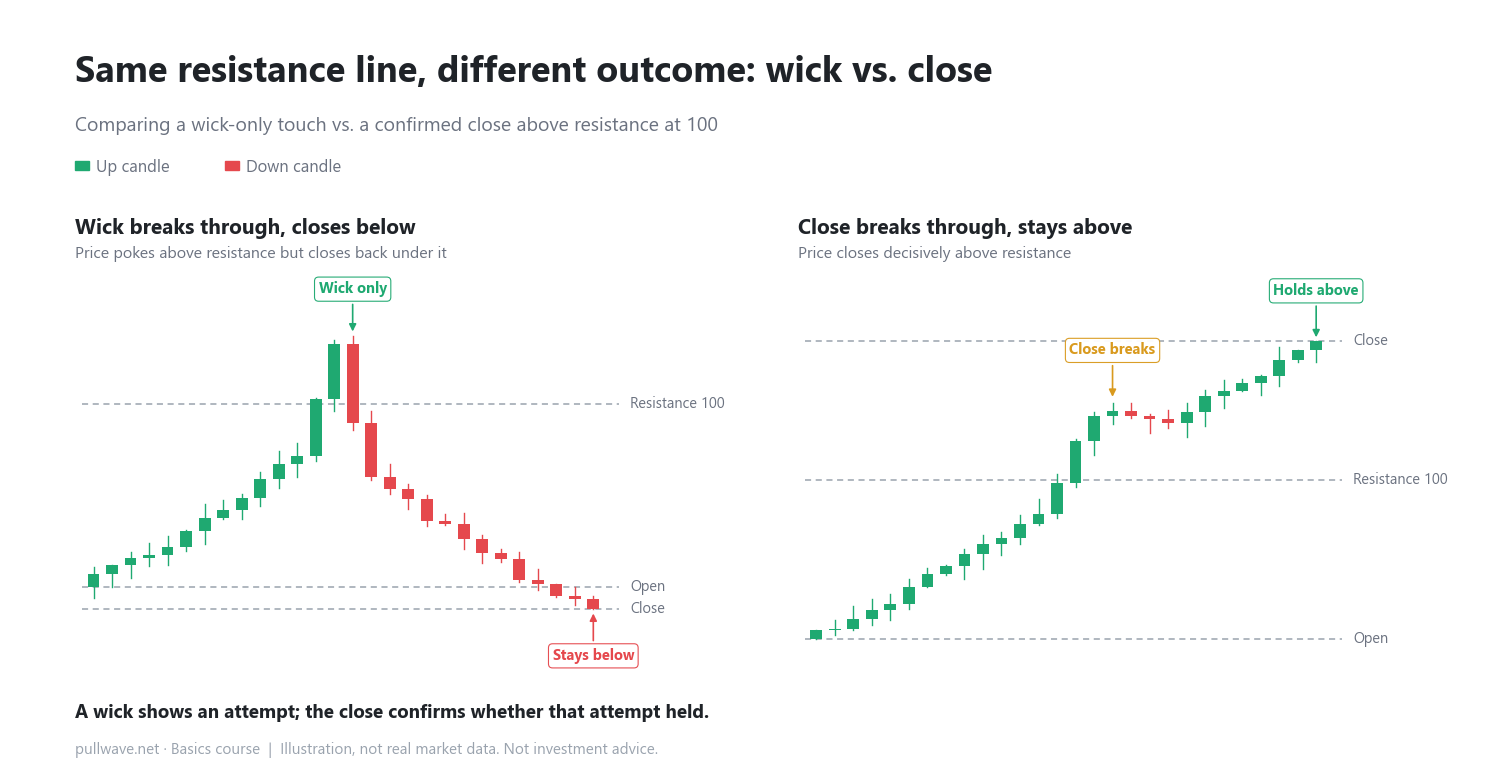
- A wick shows an attempt; the close confirms it
- Same high, different close, different meaning
- Checking a higher timeframe adds another layer of confirmation
In the last lesson, you learned why a single hammer or shooting star shape isn't enough to make a call on its own. Today we build on that idea with something many traders insist on: checking whether price broke a level with just a wick, or with the actual close. A resistance level is a price area where price has bumped up against and failed to push through before. When price "breaks" that level, it matters a lot whether that break happened only with the wick, or was confirmed by where the candle actually closed.
Why a wick break and a close break are different
The numbers side by side
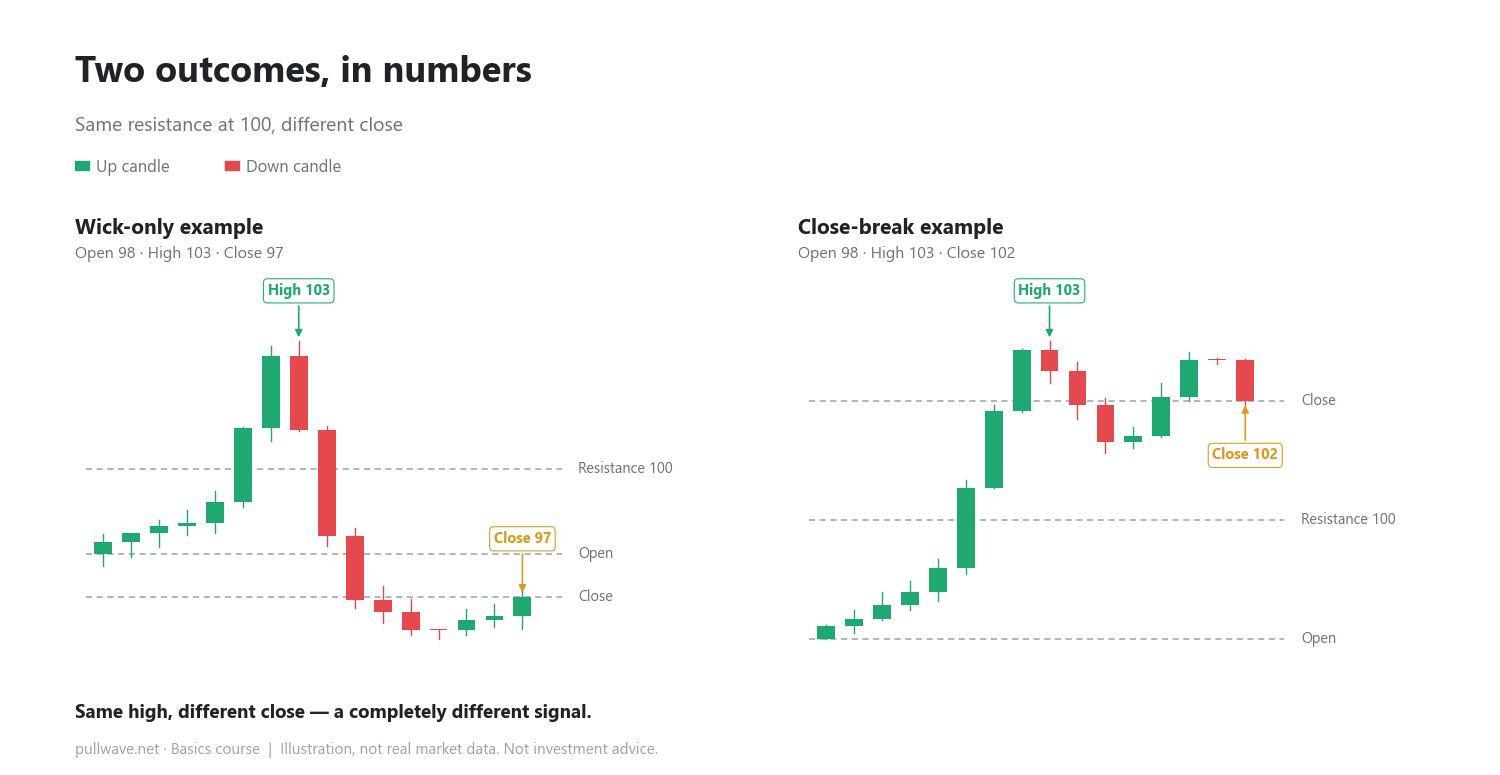
Say resistance sits at 100, as an illustration. One candle opens at 98, rises during the session to a high of 103, then closes back down at 97. Price technically touched above 100 (the high of 103), but the close ended up back under the resistance line. That's a wick-only break. Now compare: same open at 98, same high of 103, but this time the close lands at 102. This time the candle actually finished above the resistance line. Same high, very different outcome.
Why the close carries so much weight
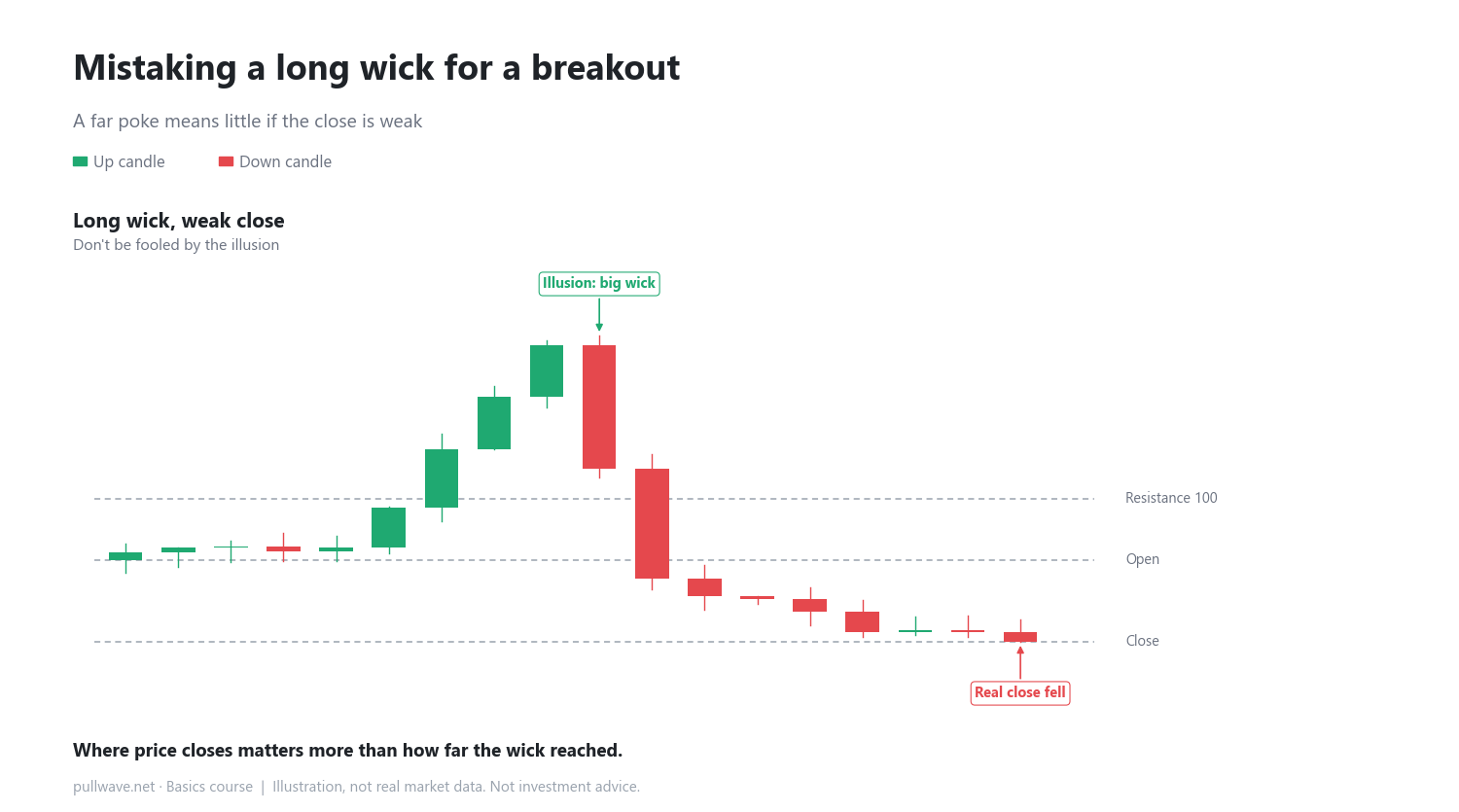
A candle's close represents where everyone trading during that period actually ended up agreeing on price. Anyone can push price up for a moment, but if that price isn't held by the end of the period, it means selling pressure won out again. When the close holds above resistance, it's evidence that buying pressure defended that price for the full duration of the candle. So "waiting for confirmation" doesn't just mean waiting around — it means basing your read on the close, not the wick.
How to use it on a real chart
Don't react to the first poke
In practice, price rarely breaks a resistance level cleanly on the first try. It's far more common to see several wick pokes above the level, each one getting rejected, before a candle finally closes above and holds.
Check a higher timeframe too
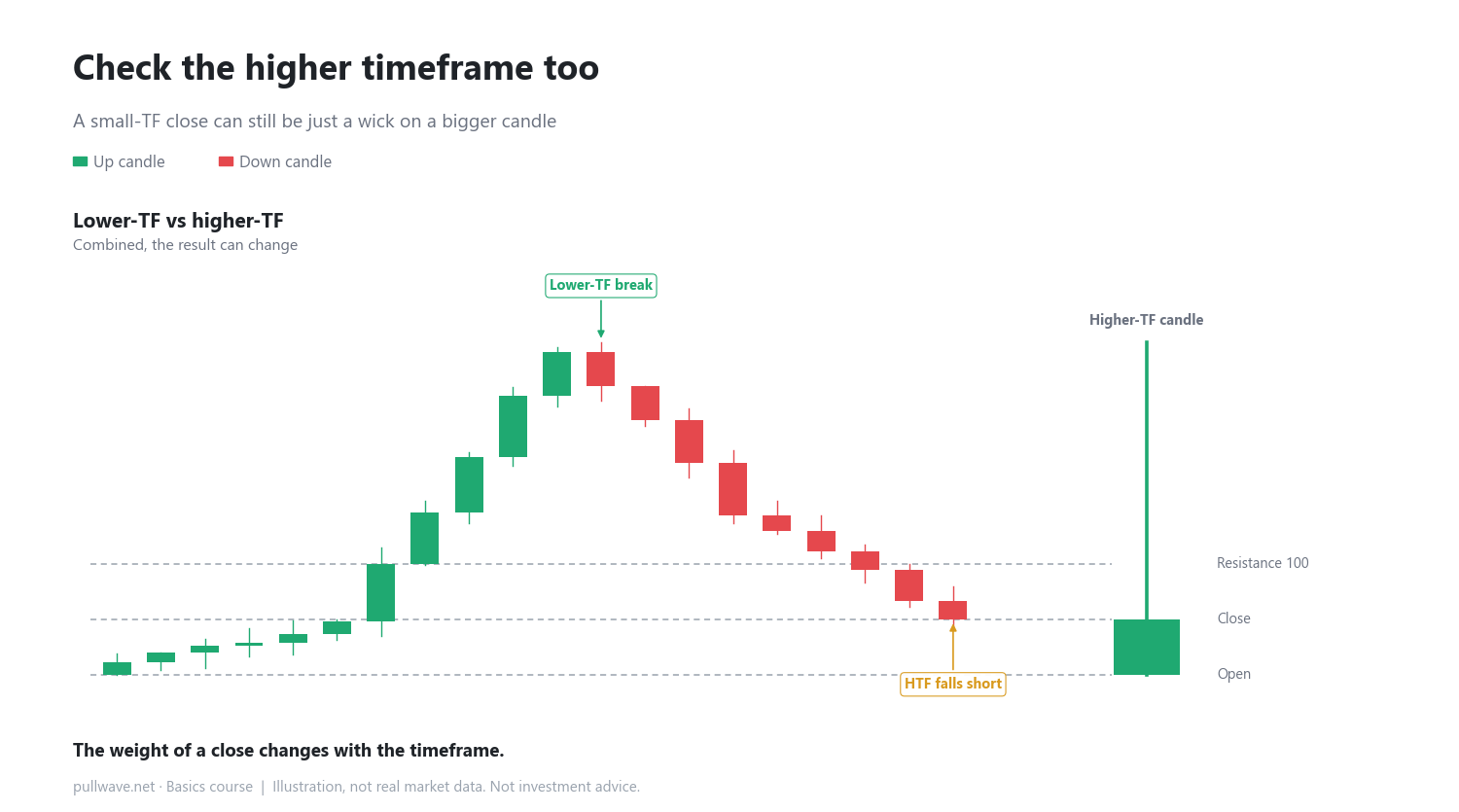
One more thing worth remembering: a close above resistance on a short timeframe (say, a 15-minute chart) can still turn out to be just a wick once you look at the combined candle on a higher timeframe (say, 1 hour). The larger the timeframe, the more weight that close carries.
Common misconceptions
- Many beginners assume that any touch above resistance means the trend has already changed. But if the close drops back below, that attempt wasn't held.
- Some think waiting for the close means you're always too late. Waiting for the close isn't about catching a perfect moment — it's a filter against reacting to a signal that never actually held.
FAQ
Does a wick-only break mean nothing at all?
Not quite. A wick still shows that buyers and sellers fought at that price level, which can be useful context for later candles. It's just not strong enough evidence on its own to say the level was "broken."
Do I have to wait for the candle to fully finish to check the close?
Yes. The close is only final once that candle's time period ends. A price that's temporarily sitting above resistance mid-candle isn't a close yet — it's just a number in progress. Getting used to thinking in terms of "when does this candle finish" removes a lot of confusion.
General education, not investment advice. The picture is an illustration, not real market data.