Basics course · Lesson 14 · Part 2 · Reading candles
Hammer and Shooting Star: Why You Shouldn't Trust Shape Alone
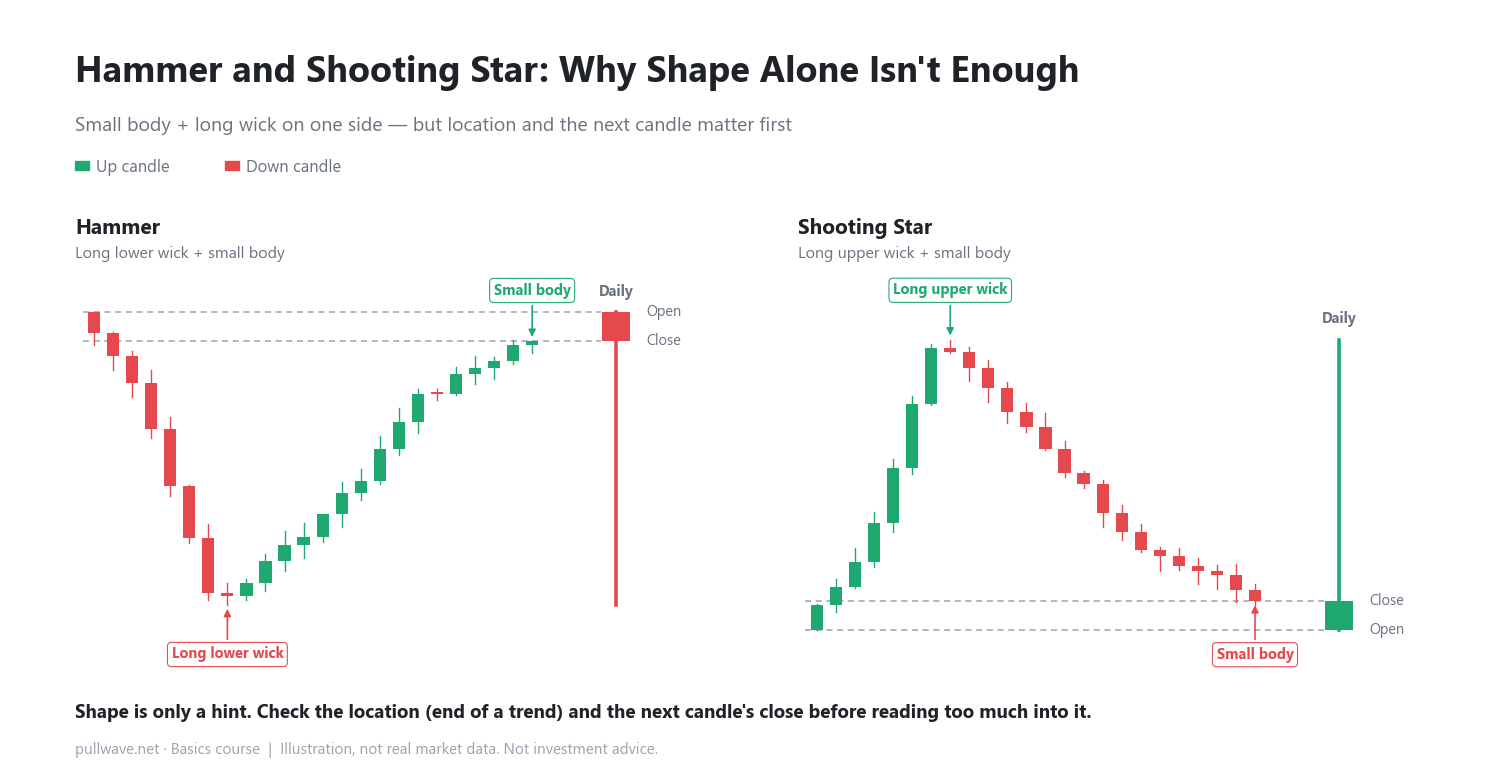
At a glance
- Hammer = small body + long lower wick; Shooting Star = small body + long upper wick
- Shape alone doesn't confirm a reversal — location in the trend matters
- Checking where the next candle closes adds real confirmation
This lesson covers two candle shapes that traders often read as possible reversal hints: the Hammer and the Shooting Star. In the previous lesson, a long candle with no wicks meant "price moved in one direction all day." Today's two shapes are the opposite: price swung hard in one direction and then came most of the way back, leaving a hint that momentum might be shifting.
The Shape of Each Candle
Hammer
A hammer has a small body, a lower wick much longer than the body, and almost no upper wick. For this shape to form, price has to drop sharply during the period (the lower wick), then climb back close to the open by the close (the small body). In short, sellers pushed hard, but buyers took most of that move back.
For example, say the open is 100, the intraday low is 90, and the close is 99. The body size is |100-99| = 1, and the lower wick length is 100-90 = 10. The wick is ten times longer than the body — that's the typical hammer ratio.
Shooting Star
Think of it as a hammer flipped upside down. The body is small, the upper wick is much longer than the body, and there's almost no lower wick. Price rallied hard during the period (the upper wick), then fell back close to the open by the close (the small body). Buyers pushed hard, but sellers took most of that move back.
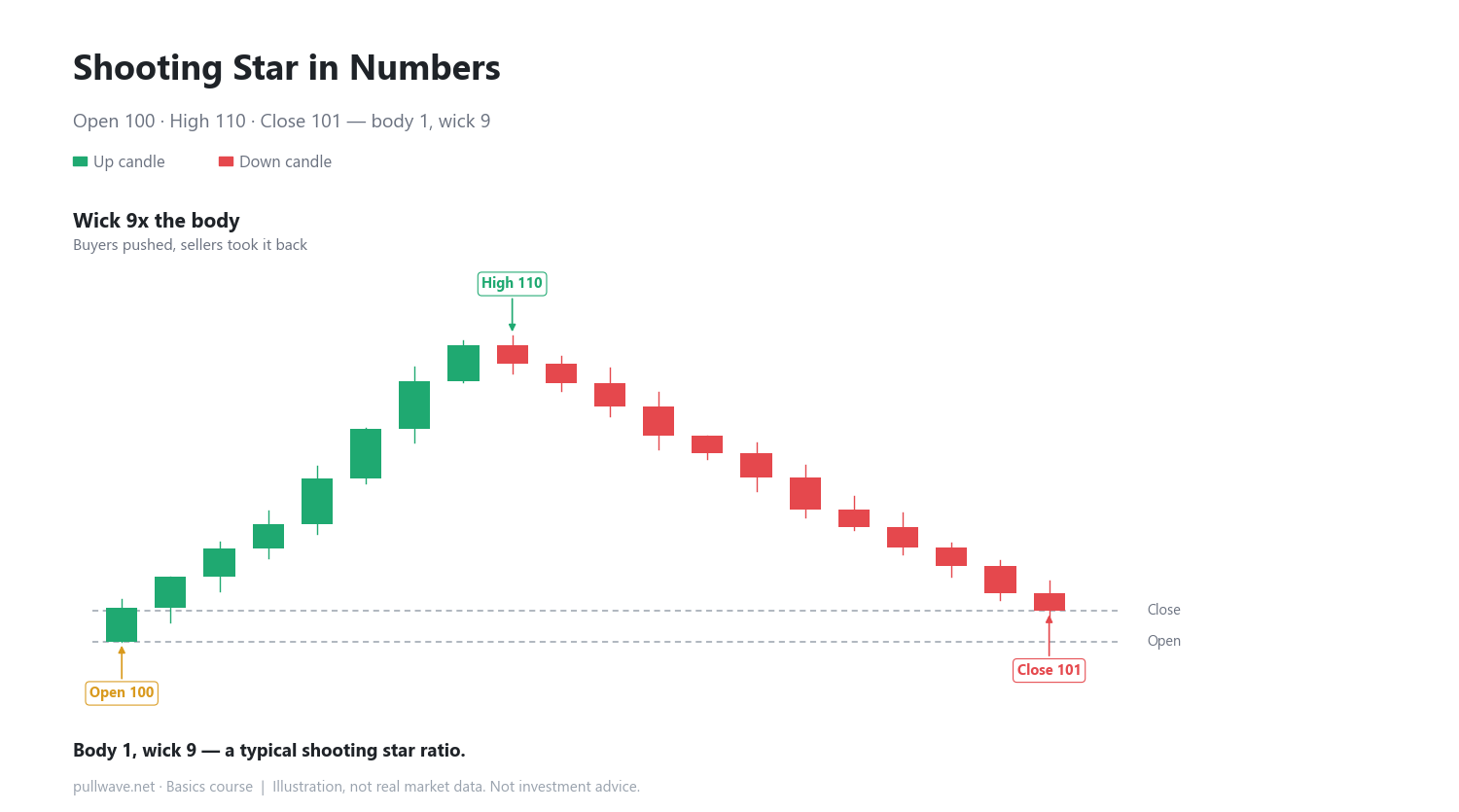
For example, open 100, intraday high 110, close 101: body = 1, upper wick = 9. Again the wick dwarfs the body.
How to Use It on a Real Chart
Shape alone is not enough to call something a reversal. Two things need to be checked together.
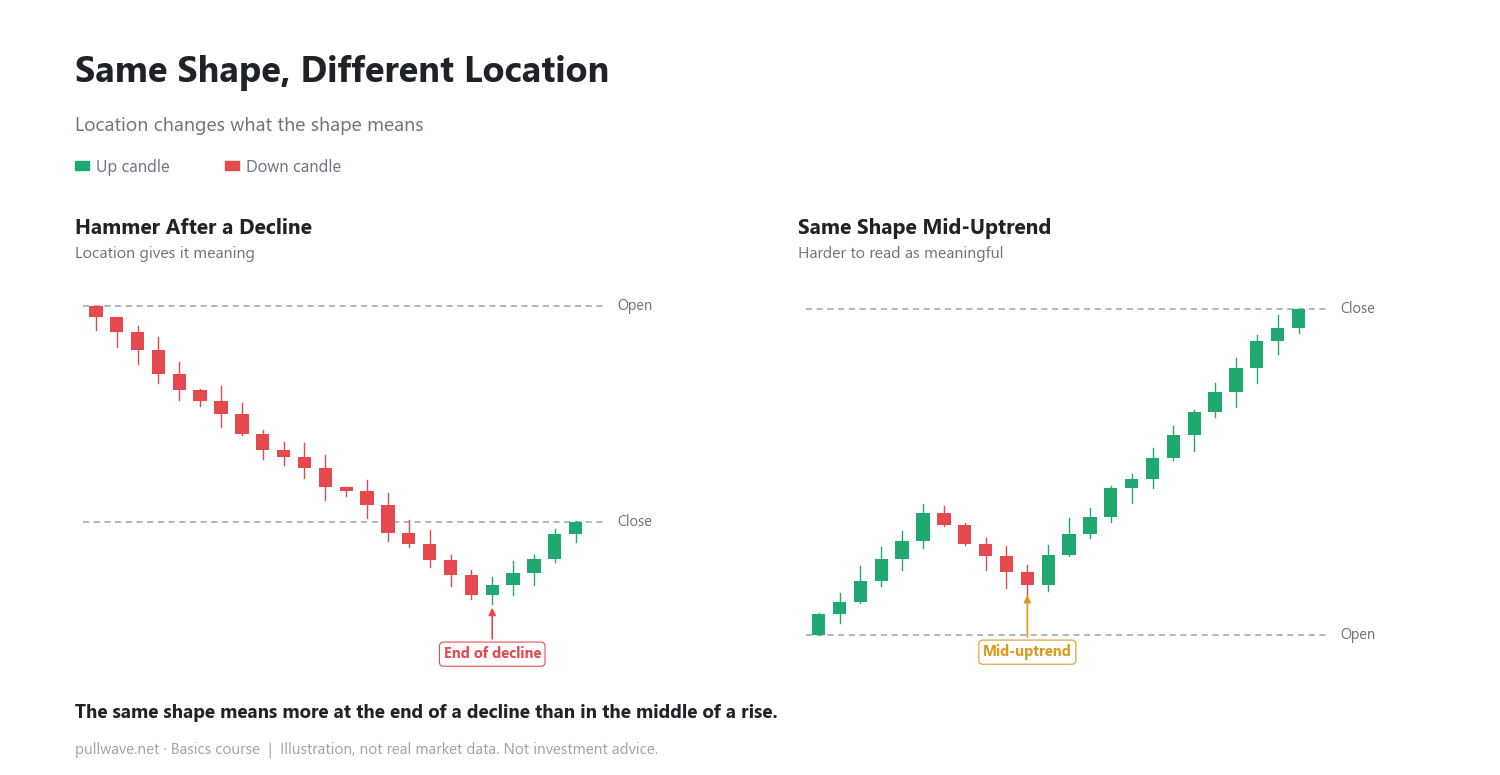
First, location. A hammer only carries meaning when it shows up after a stretch of declining price. The exact same shape appearing in the middle of an uptrend is just one volatile period — it doesn't carry the same weight. A shooting star needs to appear after a stretch of rising price to suggest momentum may be fading.
Second, the next candle. If the candle right after a hammer closes higher, that adds evidence that the recovery from the wick is continuing. If the next candle drops back below the hammer's body, the signal loses its force. The same logic applies to a shooting star — watch where the following candle closes.
Common misconceptions
- "Any long lower wick is a hammer and means a reversal." Without checking location and the next candle, it's just one volatile candle.
- "One candle is enough to draw a conclusion." A single candle is a hint, not a complete answer by itself.
FAQ
Does the body color (bullish or bearish) matter?
For both shapes, the ratio of a small body to a long wick on the opposite side matters more than the color. Color is just a minor extra detail.
Can I act on a single candle right away?
That's not recommended. Location within the broader move and how the next candle closes both add real evidence. In the next lesson, we'll look at why traders pay so much attention to the "close" price.
General education, not investment advice. The picture is an illustration, not real market data.