Basics course · Lesson 17 · Part 3 · Trend and price structure
Uptrend: Both Highs and Lows Keep Rising
At a glance
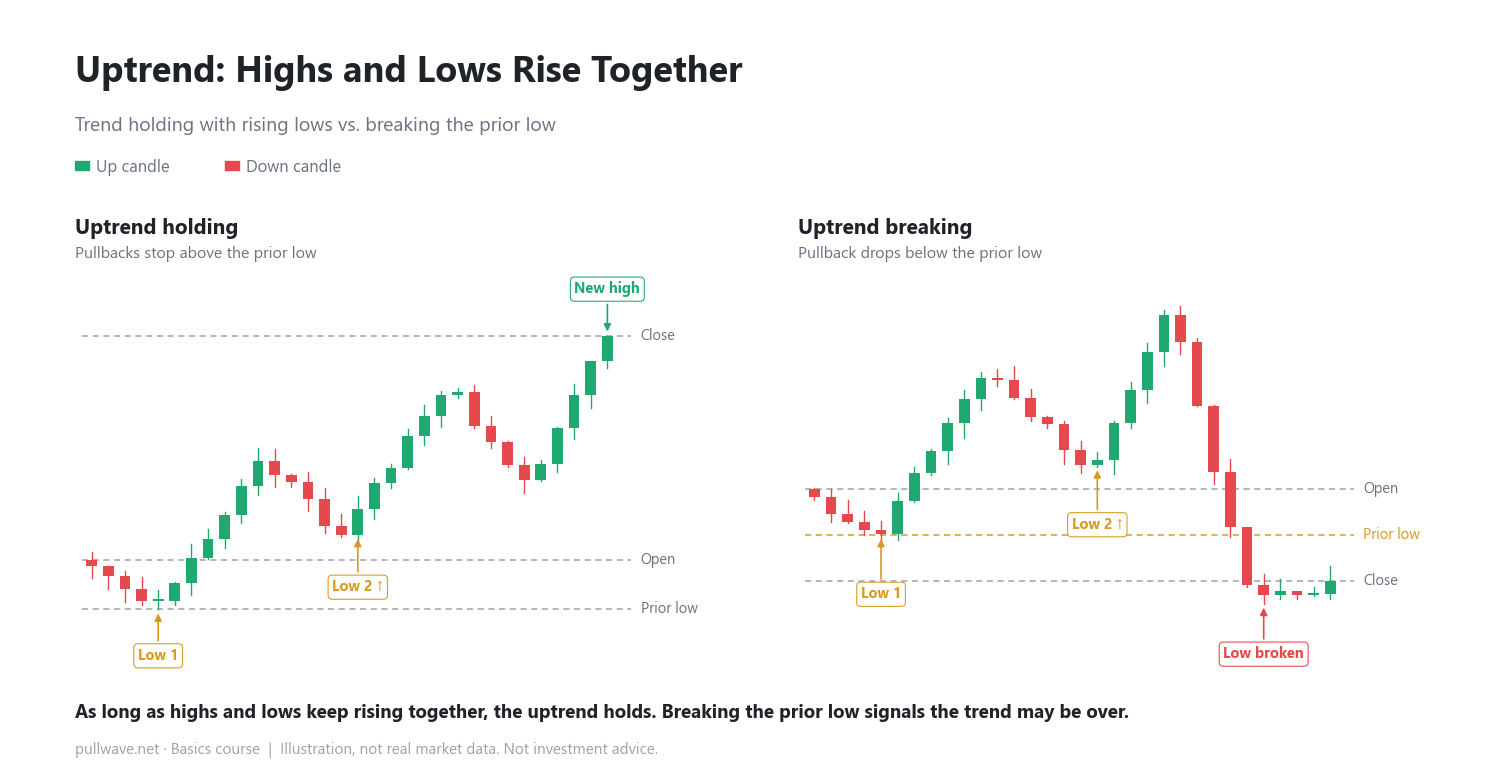
- An uptrend means both highs and lows keep rising together.
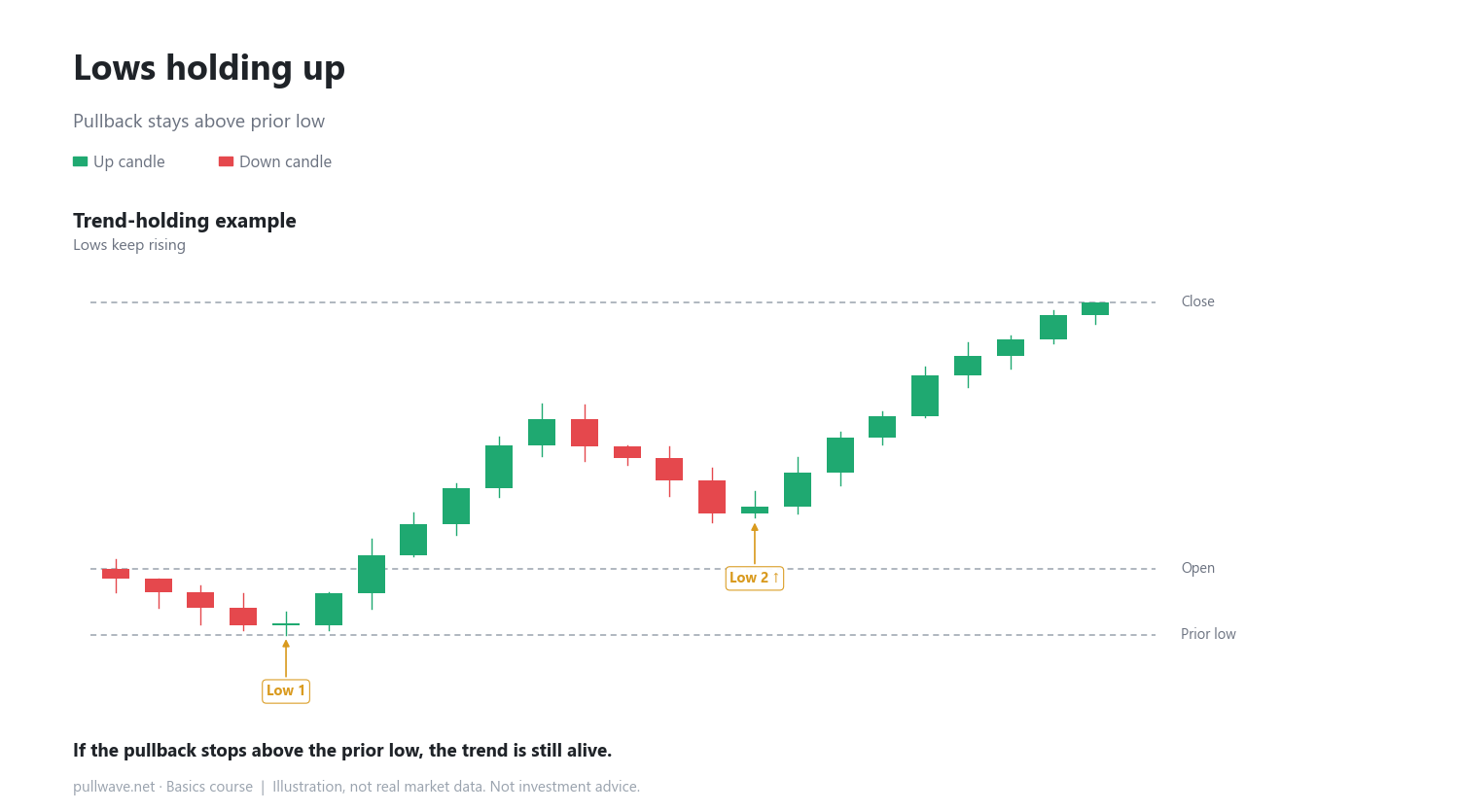
- If a pullback stays above the prior low, the uptrend structure holds.
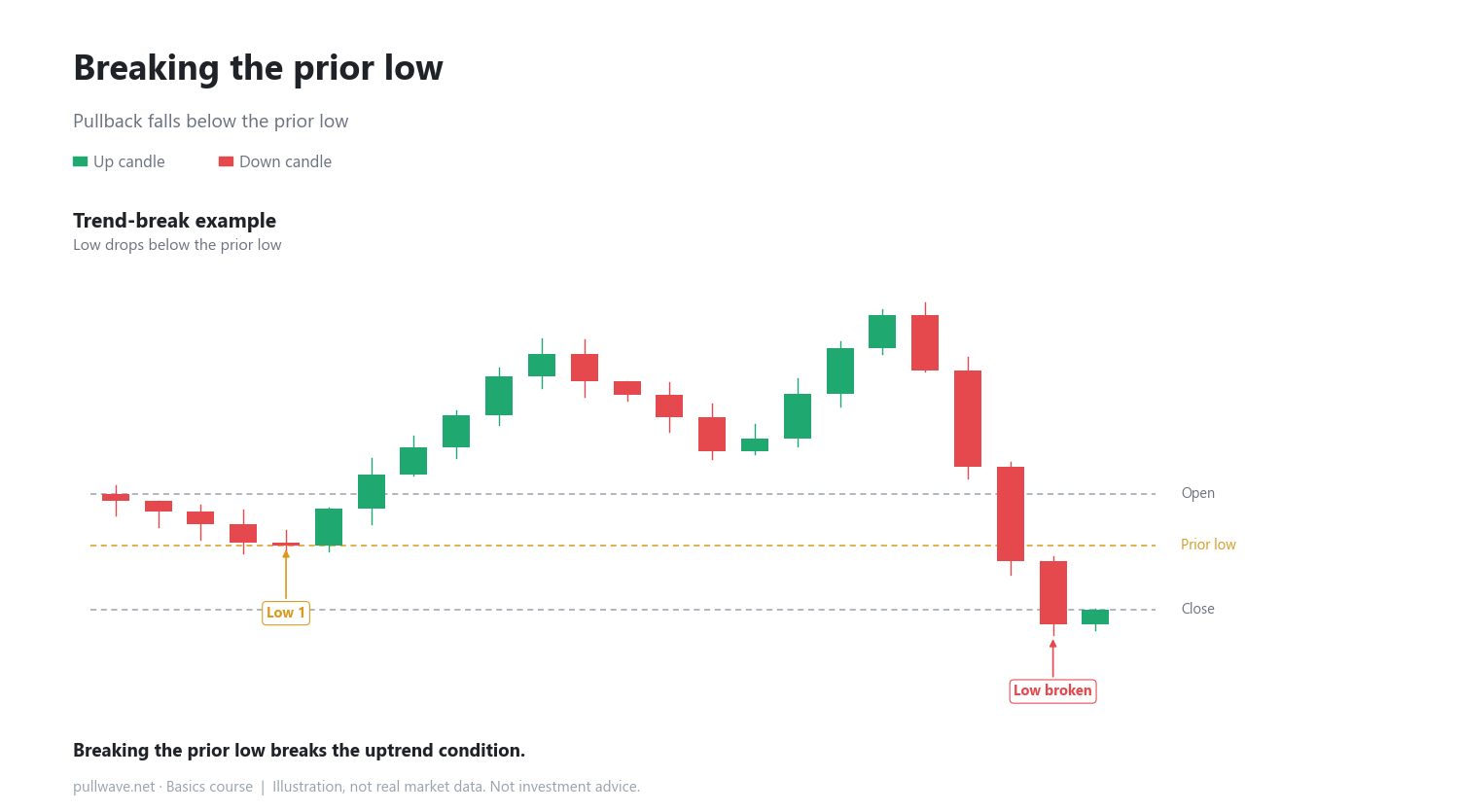
- Breaking the prior low means the uptrend condition has failed.
Welcome back! In the previous lesson, you learned how to find swing highs and swing lows on a chart — the points where price turns down (swing high) or turns up (swing low). Today we'll look at the order these highs and lows need to appear in for a move to be called an "uptrend," and at what point that structure breaks down.
An uptrend has a simple definition: each new high is higher than the previous high, and each new low is higher than the previous low. Both conditions need to happen together — not just one of them.
Highs and lows rising together
Let's look at the numbers first
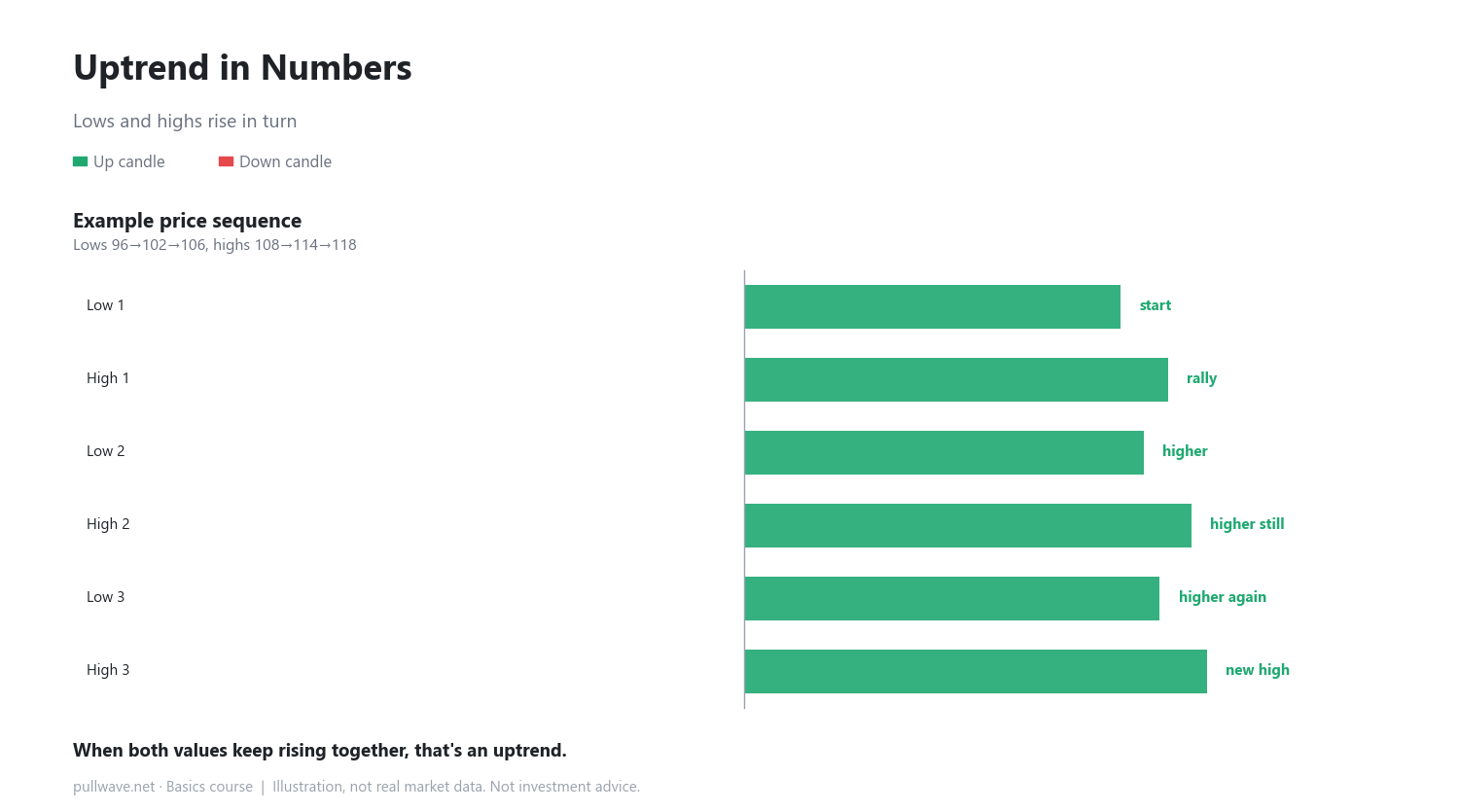
Say price starts at 100. It first dips to 96 (low 1), then rallies to 108 (high 1). It pulls back to 102 — higher than the previous low of 96 (low 2) — then rallies again to 114 (high 2). It pulls back to 106, still higher than the previous low of 102 (low 3), then rallies to a final 118 (high 3). The lows kept rising: 96 → 102 → 106. The highs kept rising too: 108 → 114 → 118. That is an uptrend.
What this looks like on a chart
Drawing those numbers as candles, every pullback stops above the prior low and then turns back up. As long as pullbacks respect the previous low, the uptrend structure is considered intact.
Breaking the prior low breaks the trend
But what if a pullback drops below the previous low? Say low 1 was 96, and the next pullback falls to 90 — that's a break of the prior low. Even if highs were still rising, once a low fails to stay above the previous low, the "highs and lows rising together" condition is broken, and it's no longer reasonable to call it an uptrend. Traders often describe this moment as "structure breaking."
How to use it on a real chart
On a live chart, build the habit of checking, after every pullback: "is this low higher than the previous one?" If yes, the uptrend structure is still intact. If price closes below the previous low, treat that as a signal to reassess, not as proof of anything by itself. Keep in mind that highs and lows look different on different timeframes, so pick one timeframe as your reference when doing this kind of structure analysis.
Common misconceptions
- A single new high can trick people into thinking the uptrend is fine. But if the very next low breaks below the prior low, the structure is broken regardless of how high that high was.
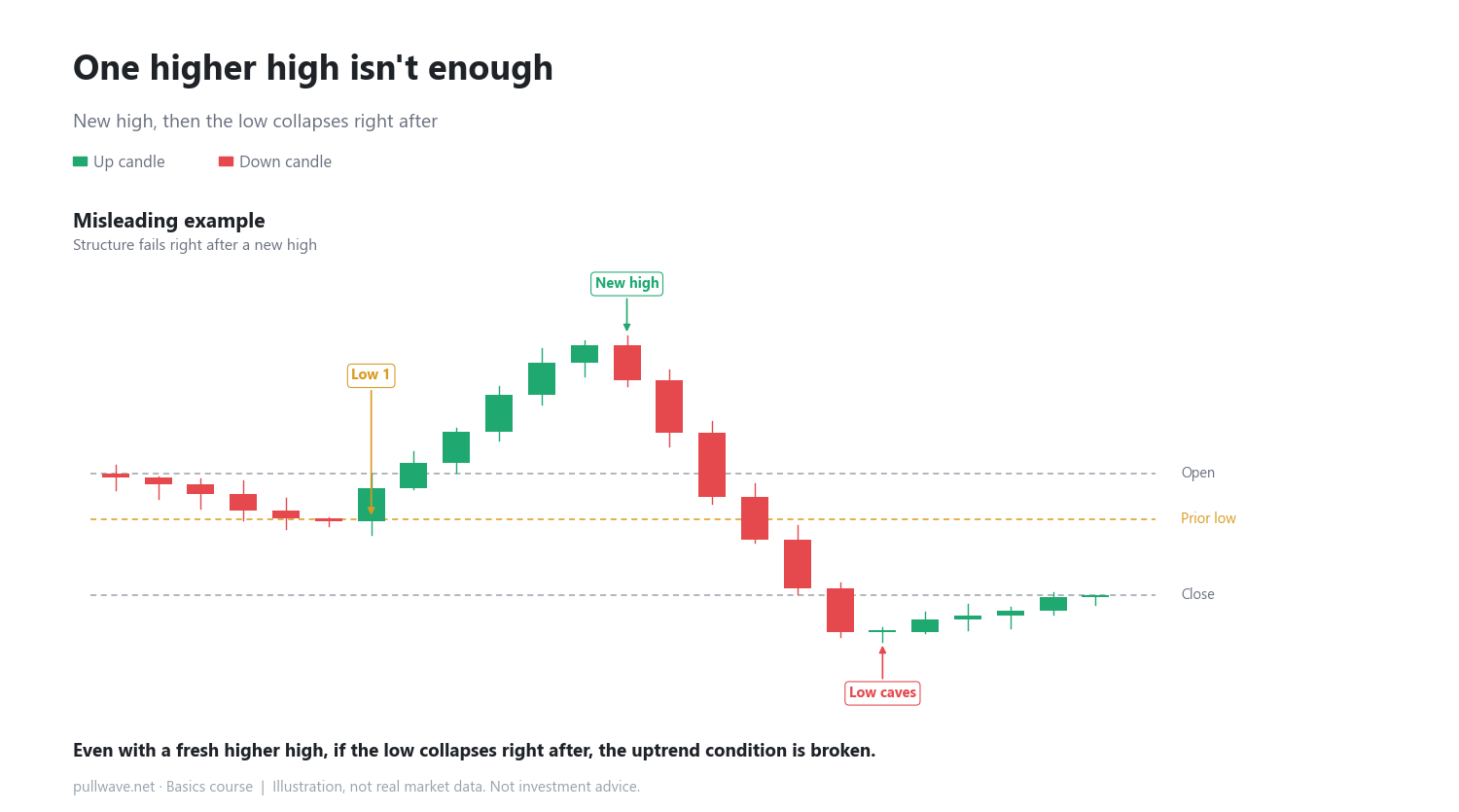
- A broken uptrend does not automatically mean a downtrend has started. Breaking the prior low only means the uptrend condition has failed — price may move sideways for a while before any new direction is confirmed.
FAQ
Is one higher low enough to call something an uptrend?
One comparison alone isn't much to go on. It's more reliable to see at least two or three consecutive pairs of higher highs and higher lows before treating the move as a trend.
What if price only touches the prior low with a wick and then rallies back up?
Many traders consider the low still intact if only the wick dipped below and the candle closed back above it. What matters most is picking a consistent rule — wick-based or close-based — and sticking with it.
General education, not investment advice. The picture is an illustration, not real market data.