Basics course · Lesson 4 · Part 1 · Trading basics
Leverage and Margin: How the Multiplier Works
At a glance
- Margin is the money you deposit with the exchange; leverage is the multiplier that scales it into a larger position.
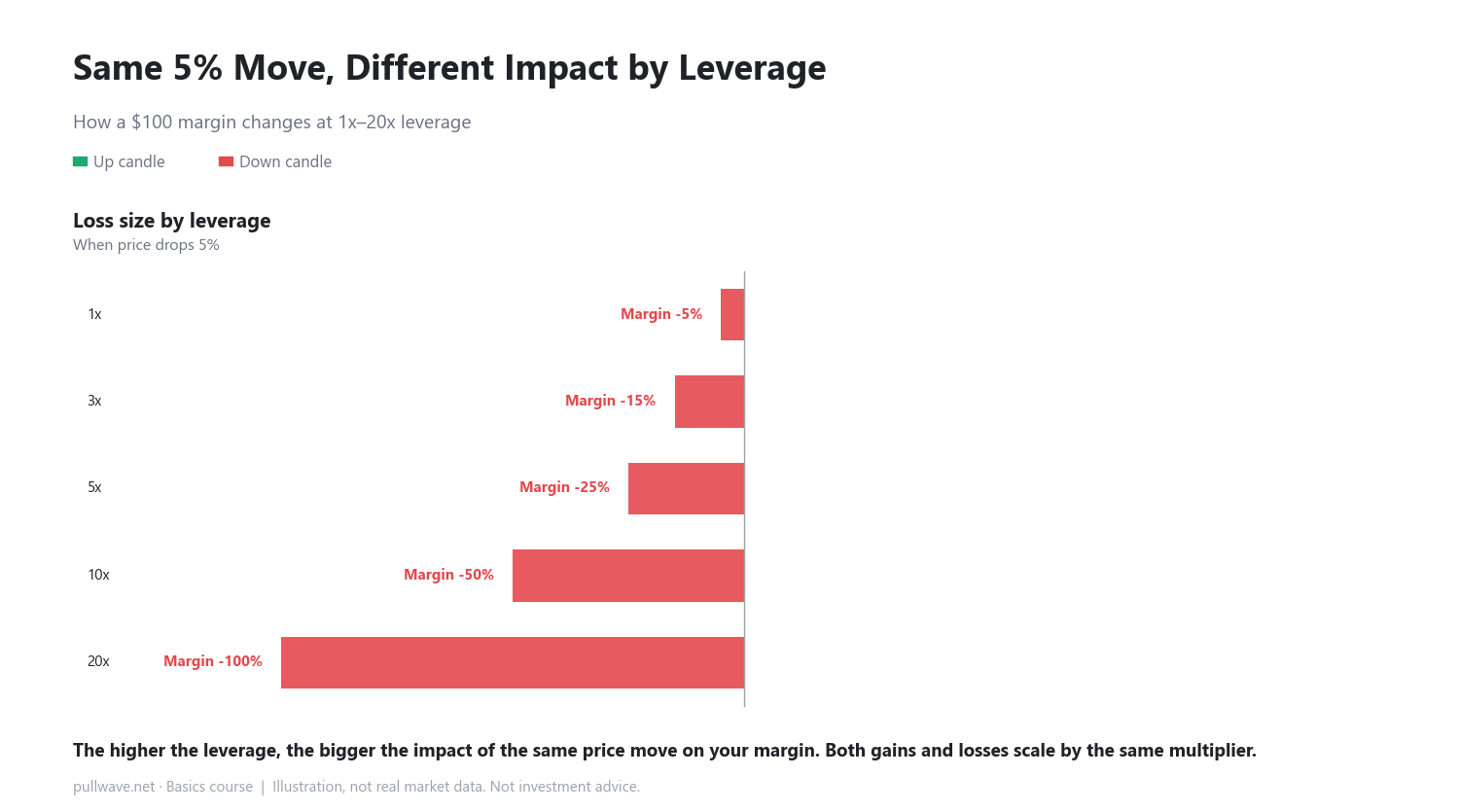
- The same price move affects your margin more as leverage increases - gains and losses both scale by the same multiplier.
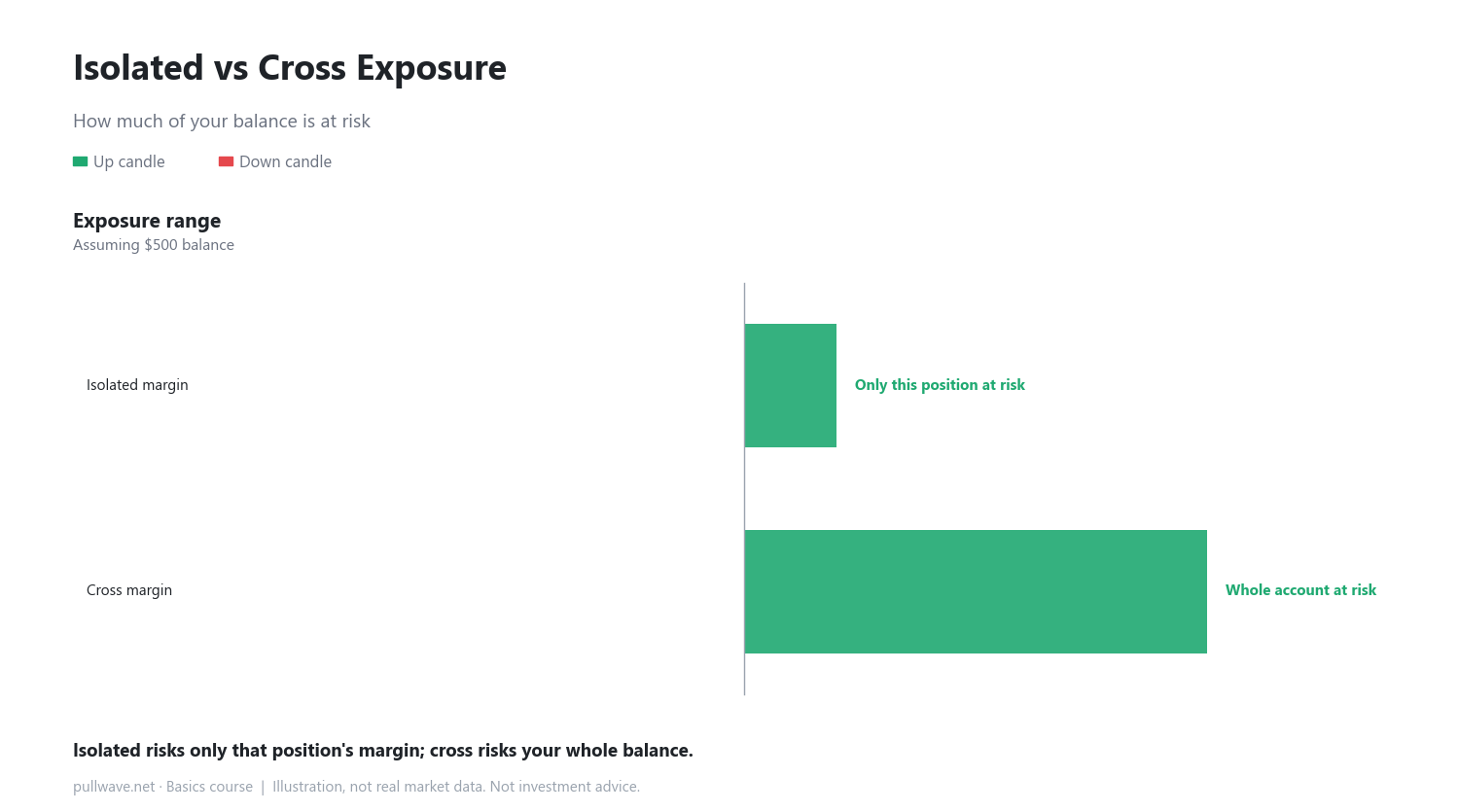
- Isolated margin risks only that position's funds; cross margin links your whole account balance together.
In the last lesson you learned that going long or short lets you trade whether price rises or falls. This lesson covers two ideas that decide how large that trade actually is: margin and leverage.
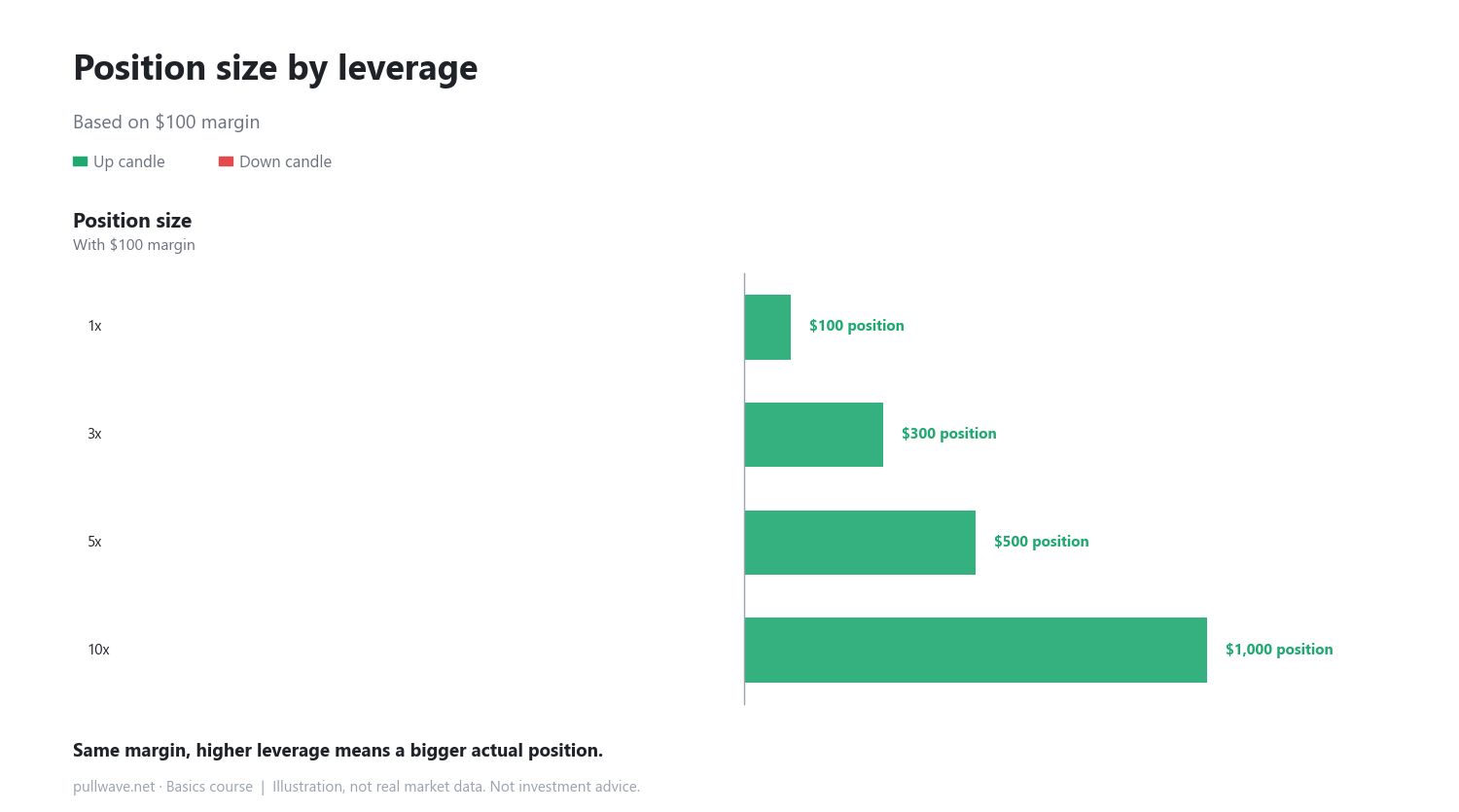
Margin is the money you deposit with the exchange to open and hold a position. It isn't the full value of the trade - it works more like a deposit that backs a larger position. Leverage is the multiplier that tells you how many times bigger than your margin the position actually is. For example, if you put up $100 of margin and use 5x leverage, you control a position worth $500.
Bigger multiplier, bigger swings in both directions
Start with position size
With the same margin, different leverage levels create very different position sizes. On $100 of margin: 1x gives you a $100 position, 5x gives you $500, and 10x gives you $1,000. Leverage simply tells you how many times your own money is being scaled up.
Same price move, different outcome
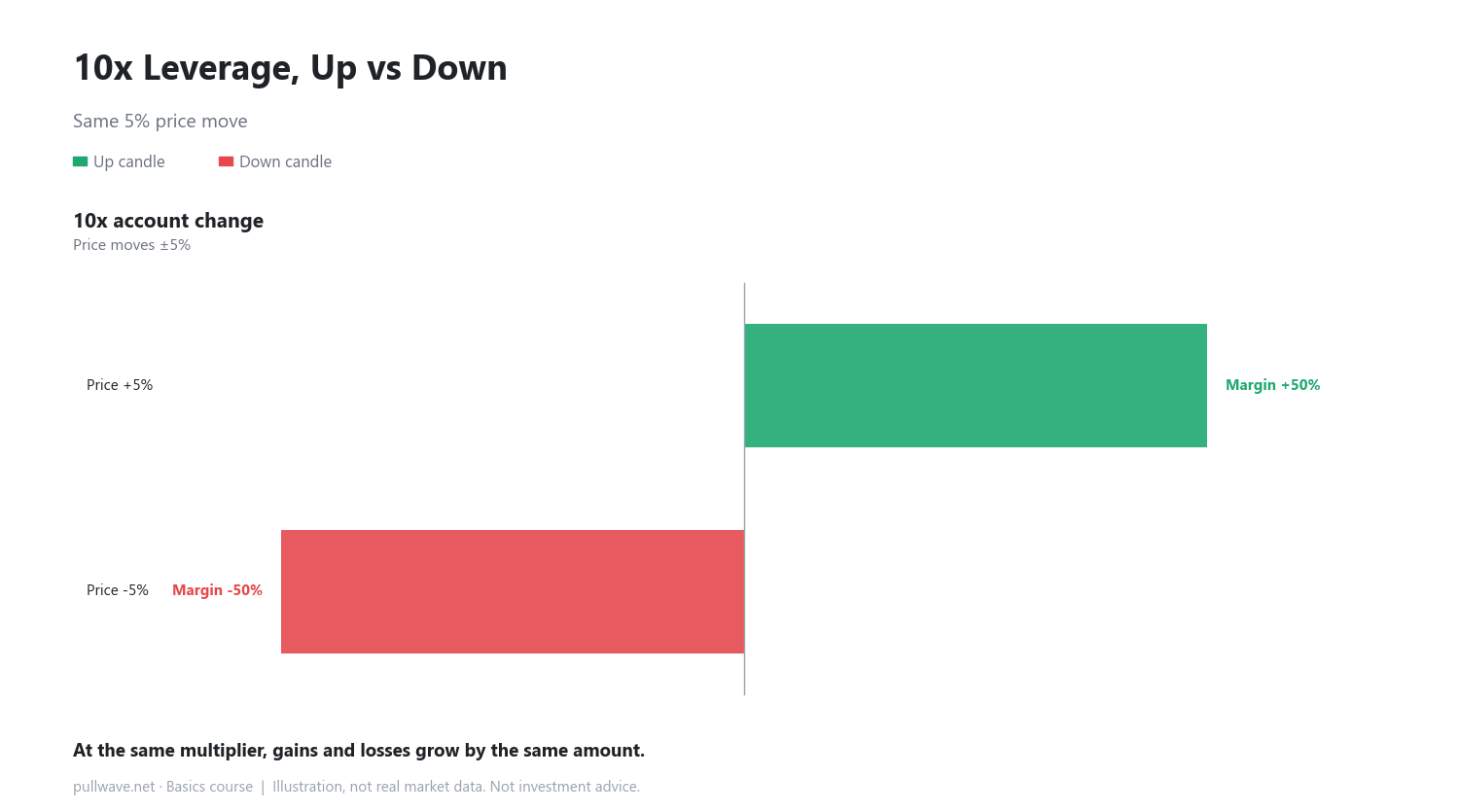
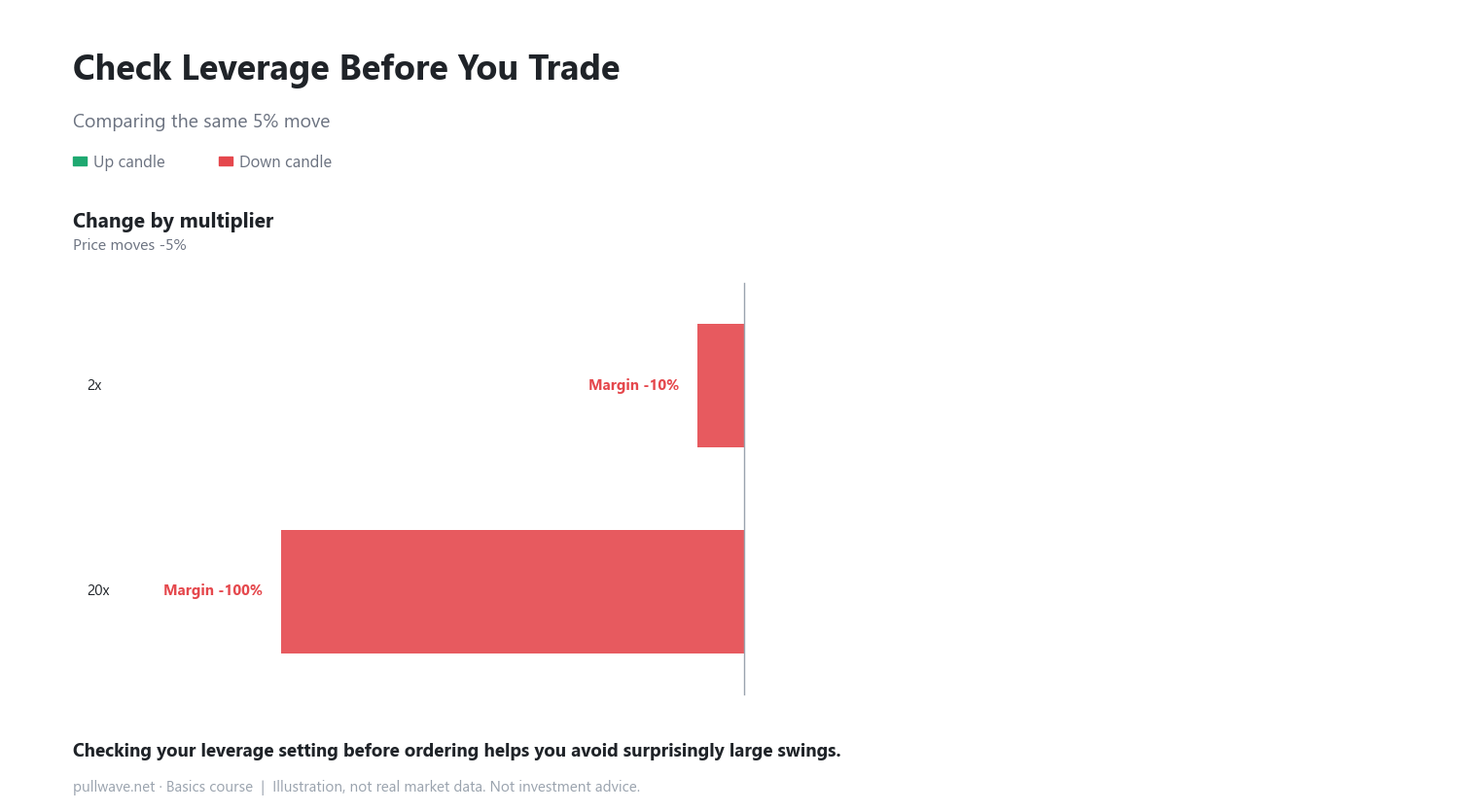
Now say price moves 5%. A 1x account changes by 5% of its margin. A 10x account, facing the exact same 5% move, changes by 50% of its margin. Multiply the price change by the leverage ratio and you get the change relative to your margin. This works the same way whether price goes up or down - gains are scaled up by the multiplier, and so are losses, by the same amount.
Isolated margin vs. cross margin
Exchanges generally offer two ways to set margin. Isolated margin means only the margin assigned to that specific position is at risk. Cross margin means your whole account balance is linked together, so if one position's loss grows large, funds from other parts of your balance can be pulled in to cover it.
How to use it on a real chart
Most exchange order screens have a slider or input box to set leverage, plus a separate toggle for isolated or cross mode. Before placing an order, make it a habit to check which mode you're in and what multiplier is currently set. The higher the multiplier, the more a small price move can shake your entire margin - keep that in mind every time you open a position.
Common misconceptions
- Many beginners assume leverage only magnifies gains. In reality, losses scale up by the exact same multiplier.
- Some assume isolated margin means losses can't happen. Isolated margin only limits the loss to that position's margin - it doesn't remove the possibility of a loss.
FAQ
Is it safer to avoid leverage entirely?
The closer leverage is to 1x, the less your margin swings for the same price move. But even at 1x, a large enough price move can still produce a loss - leverage changes the size of the swing, not whether a loss is possible.
Which is better, isolated or cross margin?
Both are tools with trade-offs. Isolated margin is useful when you want to cap the risk to one specific position. Cross margin is useful when you want to manage margin flexibly across several positions at once. Which one fits depends on the situation.
General education, not investment advice. The picture is an illustration, not real market data.