Basics course · Lesson 3 · Part 1 · Trading basics
Long and short: profit whether price rises or falls
At a glance
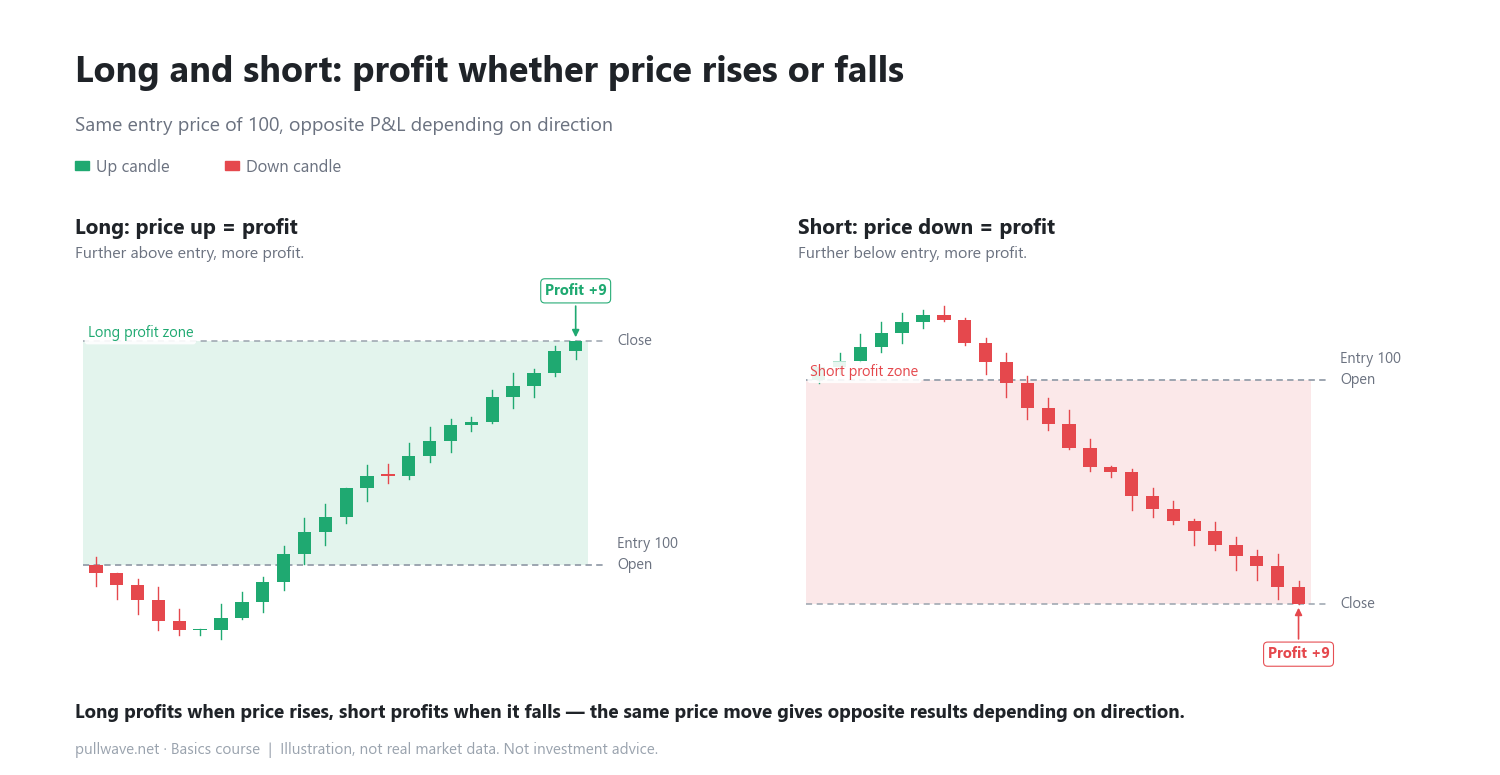
- Long profits when price rises; short profits when price falls
- Short works like borrowing a coin, selling it, then buying it back cheaper
- The same price move gives long and short opposite profit and loss
In the previous lesson, we looked at why perpetual futures never expire. This time we'll cover one of the most basic ideas in futures trading: long and short. Once you understand these two words well, you've already understood half of futures trading.
Long and short simply describe a direction. Going long means buying because you expect the price to rise. Going short means selling because you expect the price to fall. The important part is that short is not some risky trick — it's a completely normal trading method that can be just as profitable as long.
The basic structure of long and short
Long: profit when price rises
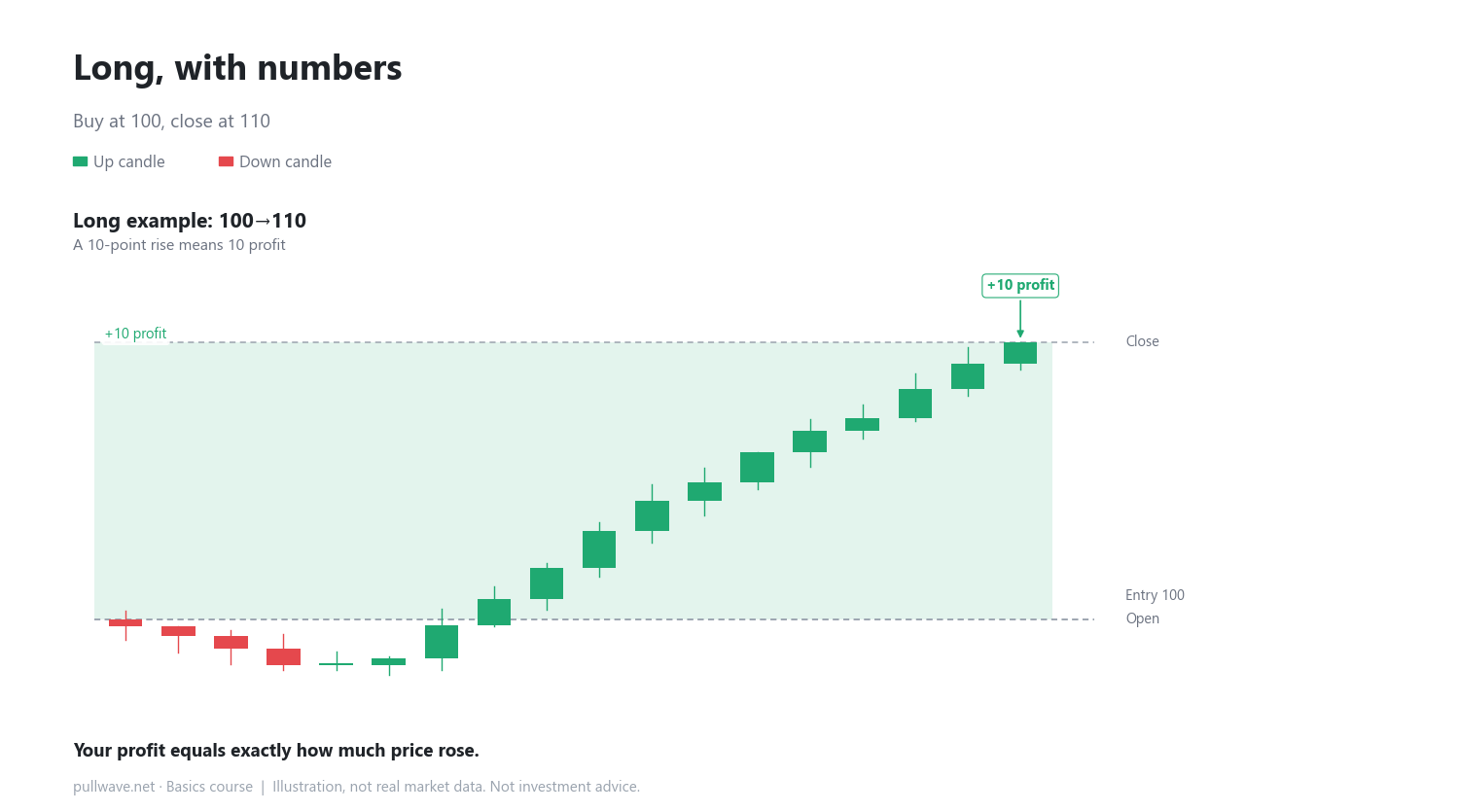
A long position profits when the price goes up. Say you buy a coin at a price of 100 (this is just an illustration number). If the price rises to 110 and you close the position, your profit is 10 — exactly the amount the price moved up. If the price falls to 90 instead, you lose 10. Long is the familiar "buy low, sell high" trade.
Short: profit when price falls
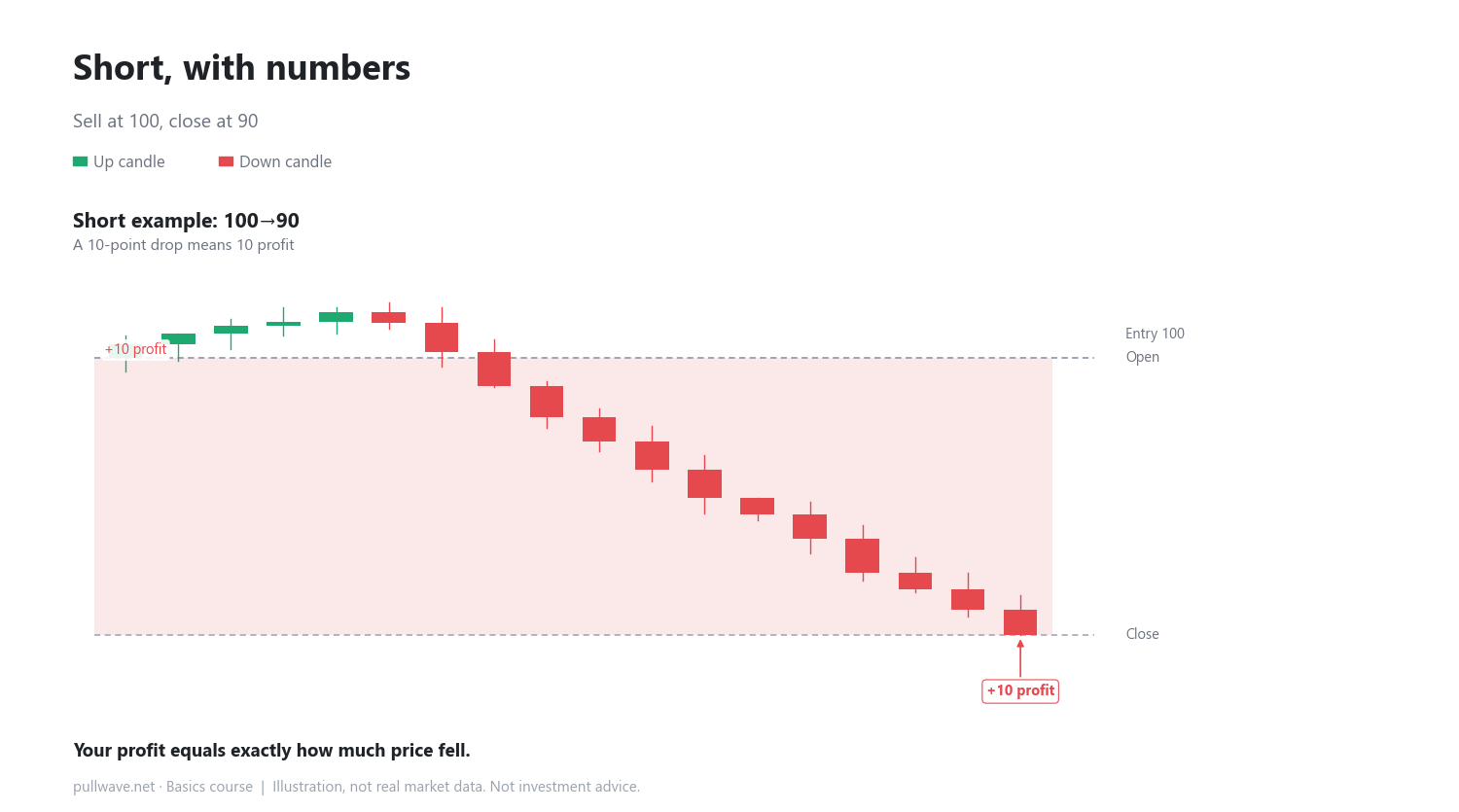
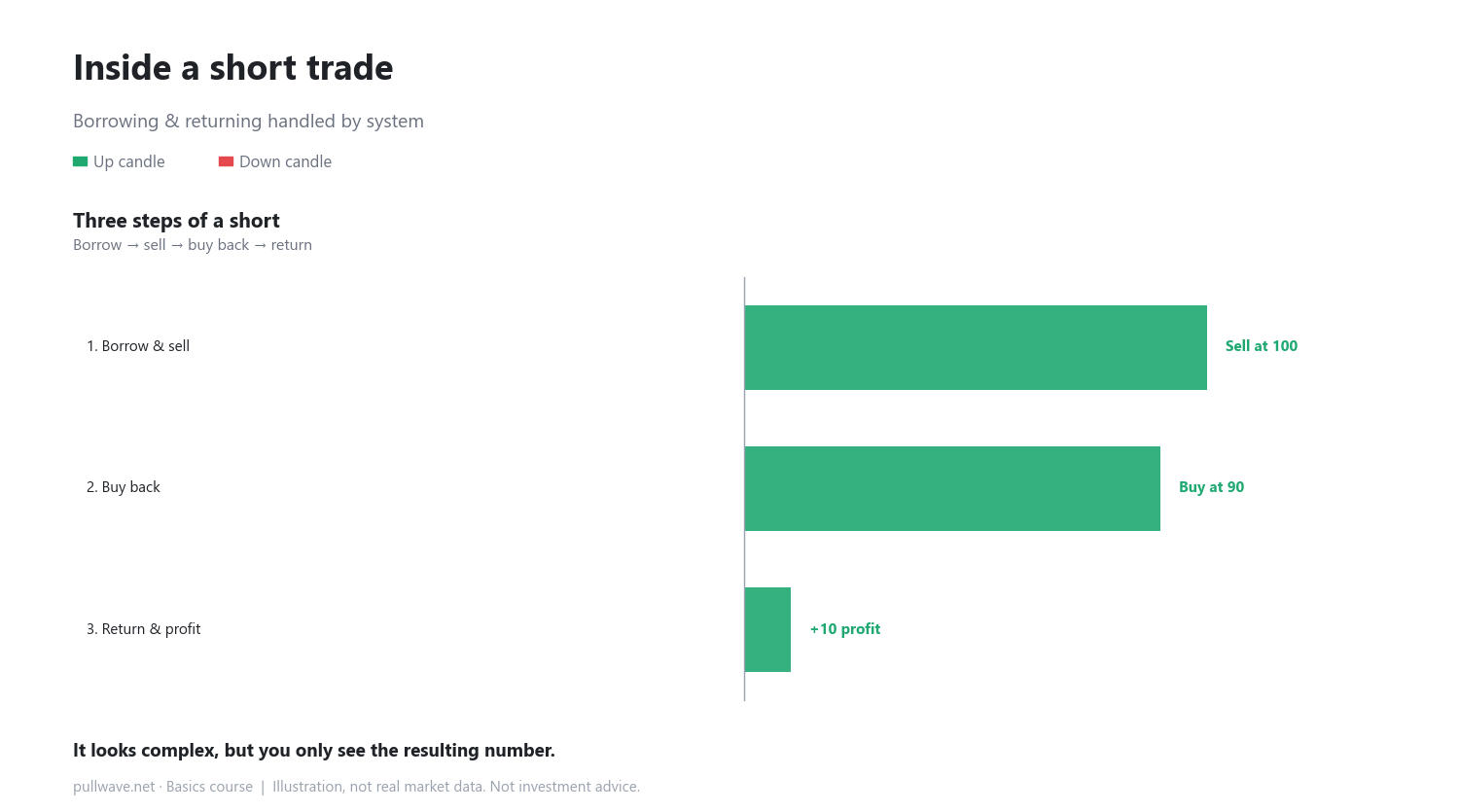
Short works the opposite way: you profit when the price falls. It can feel confusing at first, but here's a simple way to picture it. A short is "borrowing a coin and selling it now, then buying it back later at a cheaper price to return it." You borrow and sell at 100; if the price drops to 90, you buy it back at 90 to return it, and the difference, 10, is your profit. If the price rises to 110 instead, you lose 10. On most exchanges, this "borrow and return" process is handled automatically behind the scenes, so from your side it just looks like pressing a short button.
Same price move, opposite result
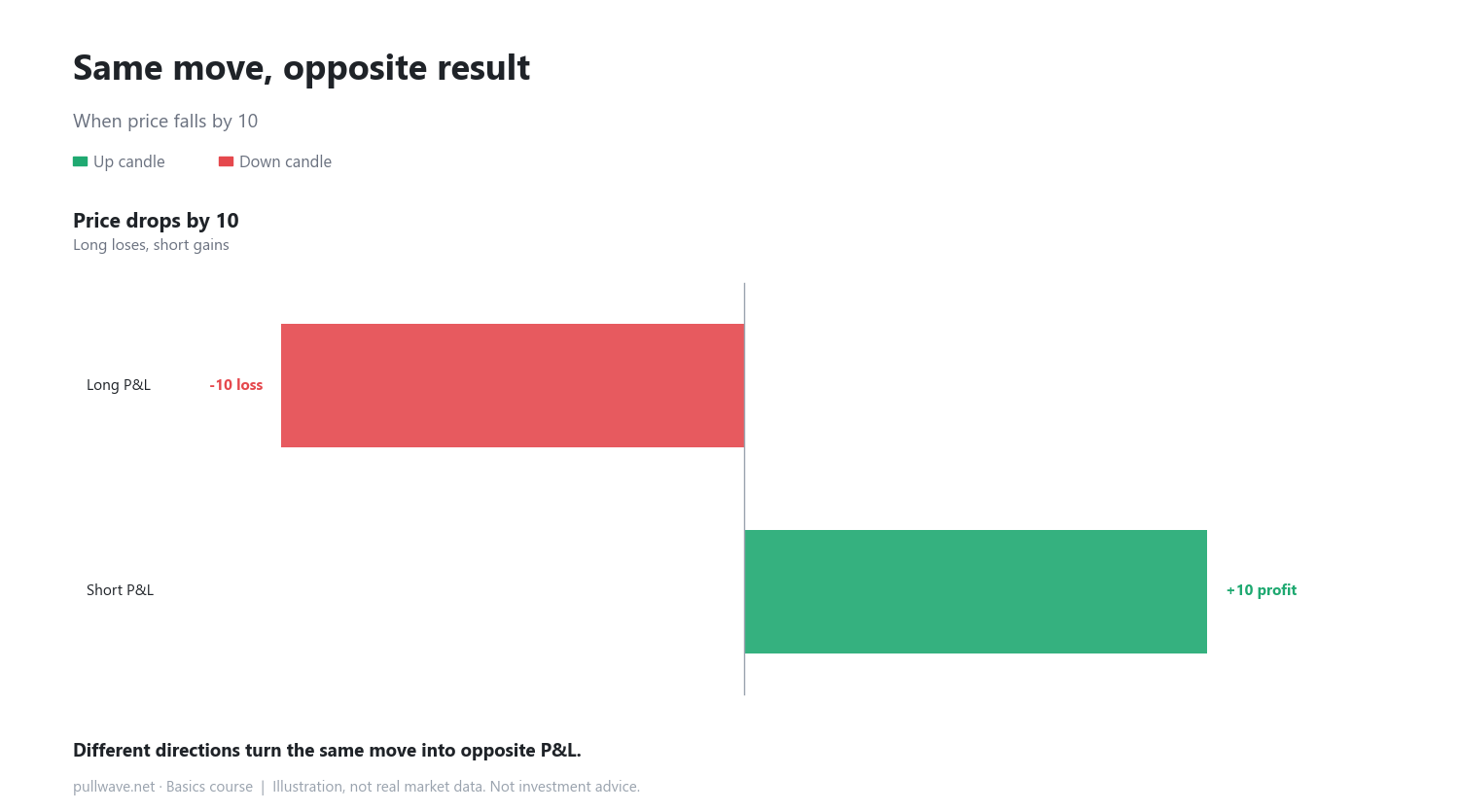
Here's the key point. Say the price drops from 100 to 90 — a move of 10. A long position loses 10, while a short position gains 10. If the price instead rises from 100 to 110, the situation flips completely: long gains 10, short loses 10. The same price change produces opposite signs in your profit and loss, depending only on which direction you chose.
How to use it on a real chart
On an actual chart, long and short aren't drawn as lines — they're not part of the price action itself. Instead, on the exchange screen you can check whether your open position is a long or a short, and what your entry price was. By comparing the current price to your entry price, and knowing whether you're long or short, you can quickly tell whether you're currently in a profit zone or a loss zone. A useful habit is to always ask yourself, "is this position better off if price goes up, or if it goes down?"
Common misconceptions
- People often assume short is a strange, risky trade, but structurally it's just the mirror image of long, equally normal. It's also used for reasons beyond simply expecting a decline, such as adjusting exposure to price direction.
- It's easy to think you personally have to handle borrowing and returning a coin every time you go short, but in practice the exchange's system handles that process automatically — you only ever see the resulting profit or loss as a number.
FAQ
Do I have to pick either long or short and stick with it?
No. Long and short are simply directions you choose based on the situation. The same trader can go long at one time and short at another — both are equally normal trading methods that can produce profit or loss.
Is short riskier than long?
Looked at purely as a direction, the risk level is similar. One structural difference is that price can rise without a theoretical ceiling, while it can only fall as low as zero, which makes the loss shape feel a bit different between the two. We'll look more closely at how leverage affects this in the next lesson.
General education, not investment advice. The picture is an illustration, not real market data.