Basics course · Lesson 2 · Part 1 · Trading basics
Perpetual Futures Explained: Why There's No Expiration Date
At a glance
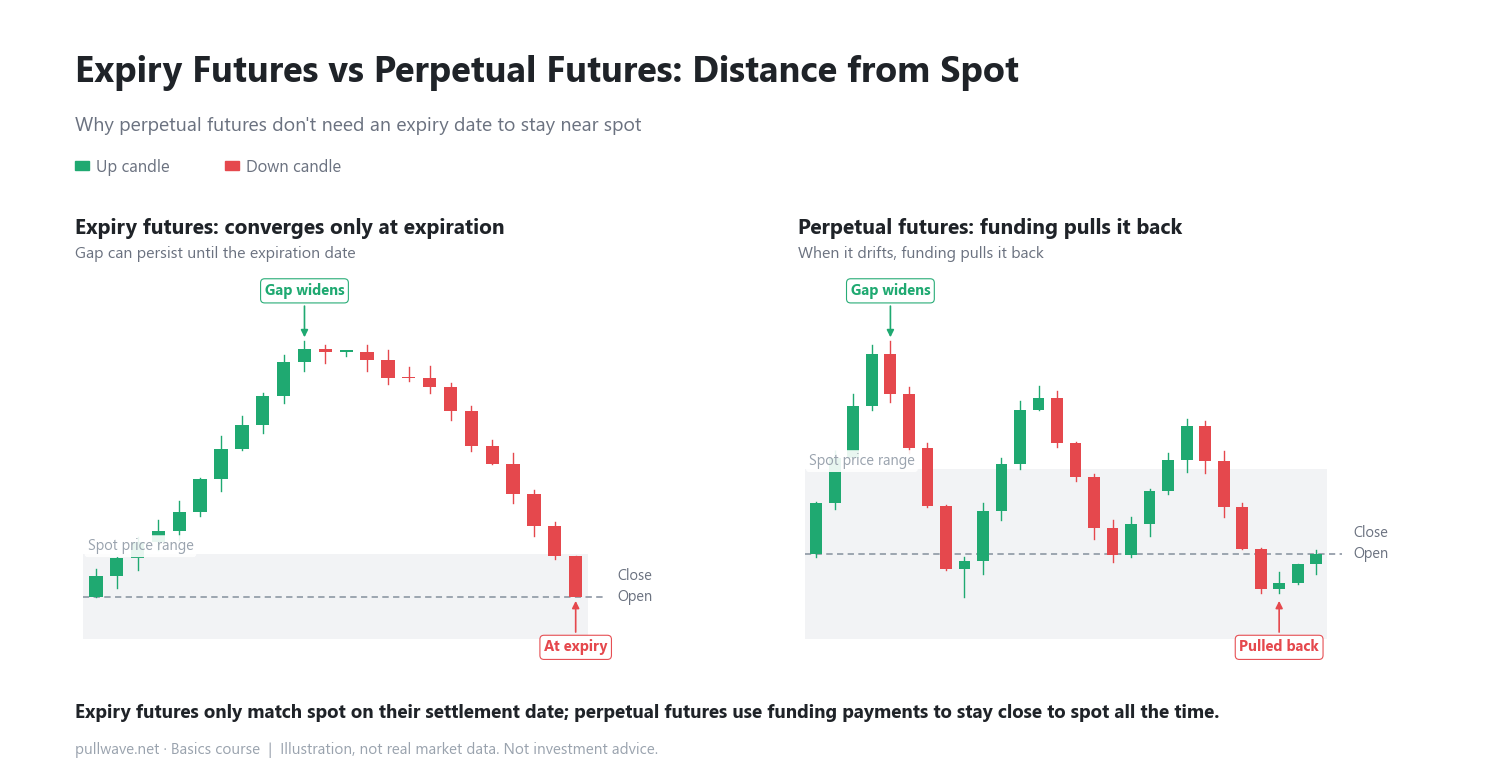
- Expiry futures converge to spot on a fixed settlement date
- Perpetual futures use the funding rate instead of a date to stay close to spot
- Funding is paid between long and short traders, not to the platform
In the last lesson, we compared spot and futures trading. Today we zoom into one more split inside "futures": expiry futures versus perpetual futures. Both are futures contracts, but they relate to the spot price in very different ways.
The core idea
Expiry futures: a contract with a fixed date
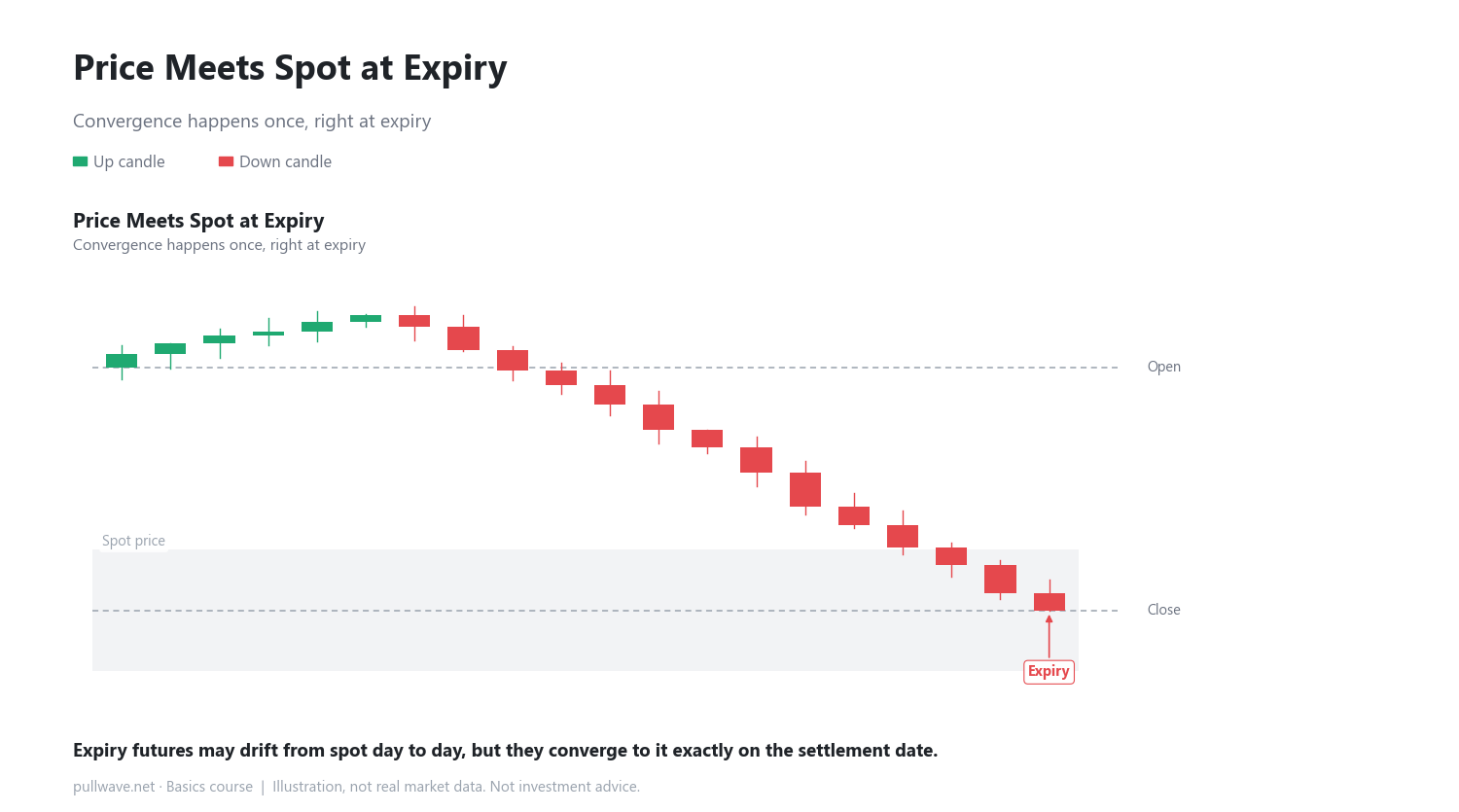
An expiry futures contract has a settlement date decided in advance — say, a specific day a few months out. On that date, the futures price is forced to match the spot price exactly. Before that date, the futures price can drift above or below spot depending on what traders expect and how much buying or selling pressure there is. For example, if spot is at an illustrative 100 and many traders expect prices to rise, the futures price might climb toward 112. As the settlement date gets closer, that gap shrinks, and on settlement day it converges back to 100. This happens because the contract itself is built to force that outcome.
Perpetual futures: no expiry, so something else has to do the job
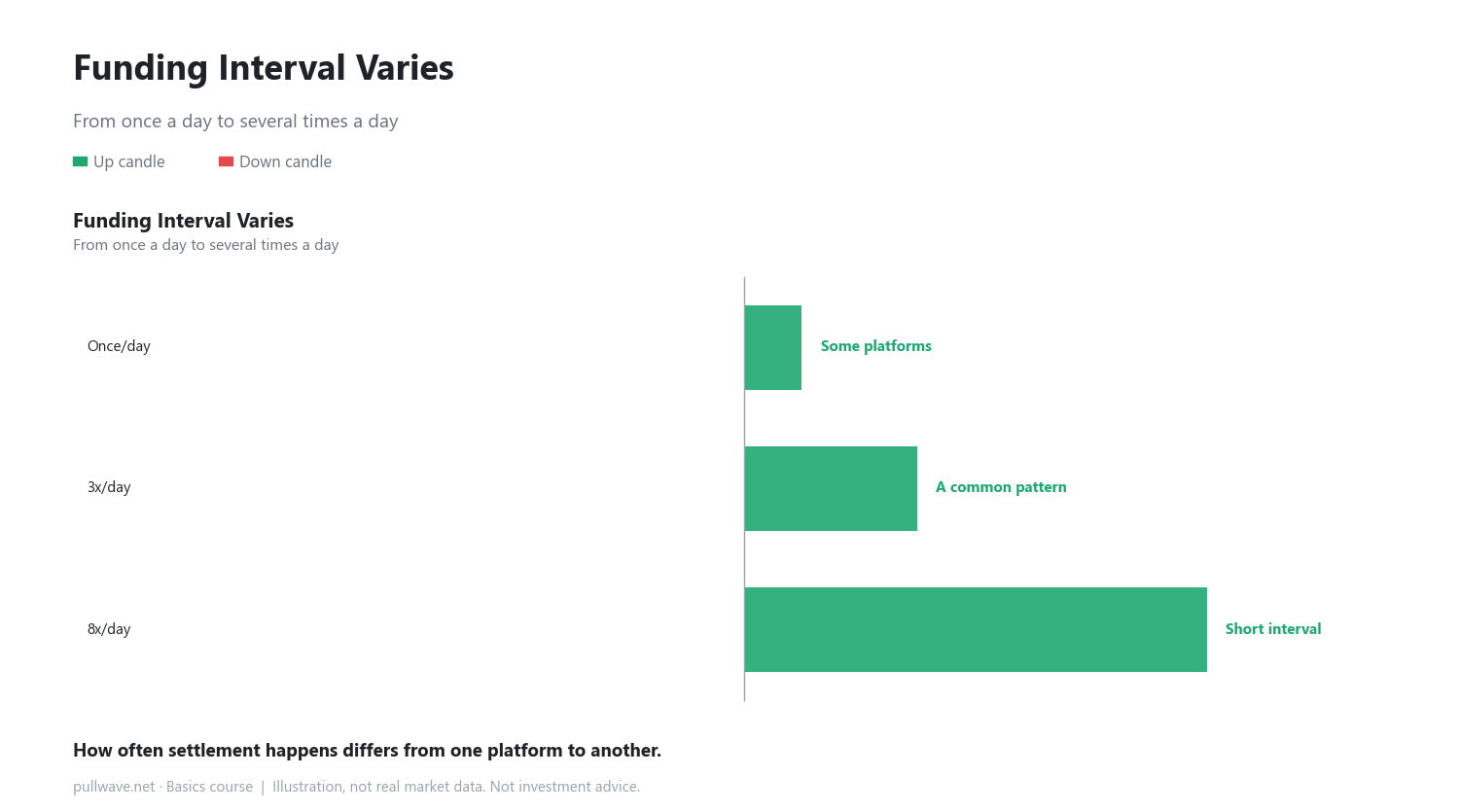
A perpetual futures contract, as the name suggests, has no settlement date. But without a date forcing convergence, the futures price could in theory drift further and further from spot with nothing pulling it back. To prevent that, exchanges use a mechanism called the funding rate. At regular intervals (the exact timing varies by platform, often every few hours), money changes hands between long positions (betting on a rise) and short positions (betting on a fall).
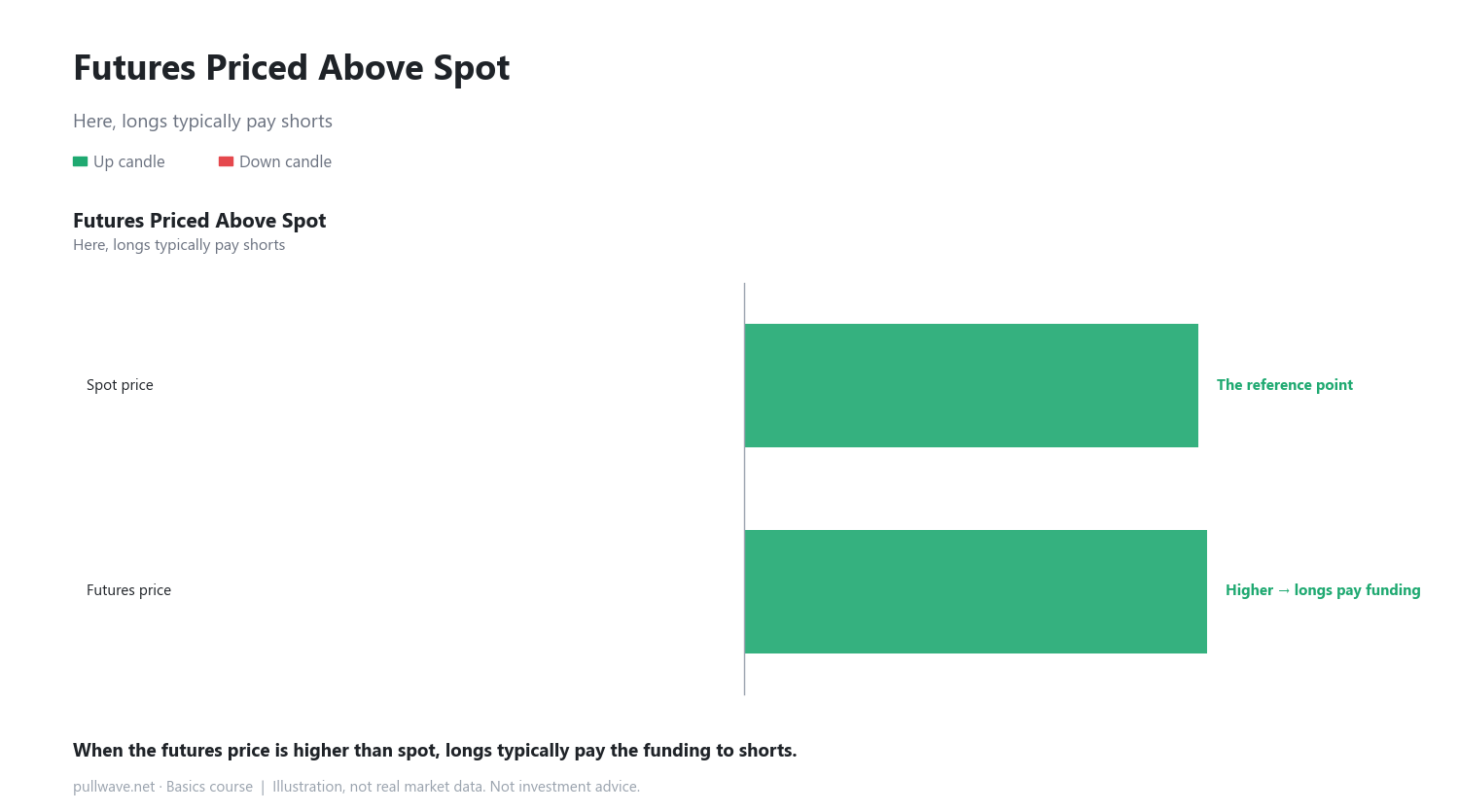
Here's a simple example. Say spot is at 100 and the perpetual futures price is at 102. A higher futures price usually means buying pressure on the long side is stronger. In this situation, traders holding longs typically pay a small funding amount to traders holding shorts. The longer someone holds a long position, the more of these payments add up, so traders naturally start trimming longs or adding shorts — and that creates pressure pushing the futures price back down toward spot. If the futures price were below spot instead, the payment direction flips: shorts pay longs.
Why it keeps coming back: a repeating cycle, not a one-time event
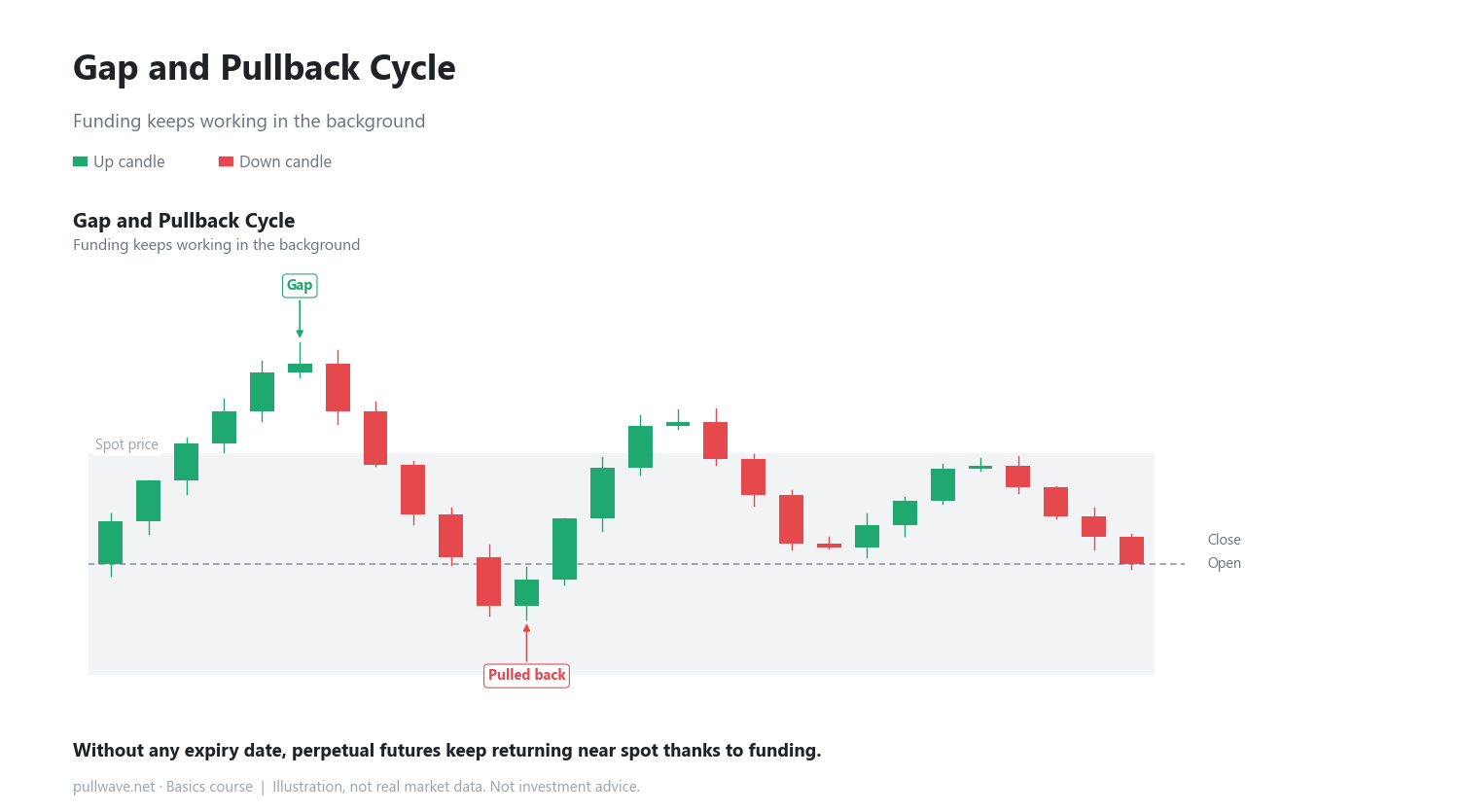
Perpetual futures don't have a single convergence day like expiry futures do. Instead, this gap-then-funding-then-converge process repeats continuously. Whenever supply and demand push the price slightly away from spot, funding payments create pressure in the opposite direction, pulling it back close again. That's why a perpetual contract's price tends to stay in a similar range to spot over time, without needing any specific expiration date.
How to use it on a real chart
On a real exchange screen, a perpetual futures contract usually shows a funding rate number along with a countdown to the next settlement. A positive number generally means longs pay shorts; a negative number means shorts pay longs. The settlement frequency differs between platforms — some settle once a day, others multiple times a day. The main thing to remember is that holding a position across a settlement time triggers a funding payment.
Common misconceptions
- "Perpetual means there's no cost like funding at all" is incorrect. Instead of an expiry date, there's always a funding mechanism working in the background.
- "Funding is a fee the platform keeps" is also a misconception. Funding is basically money exchanged directly between traders holding long positions and traders holding short positions.
FAQ
Can I close an expiry futures position before it expires?
Yes. You can close an expiry futures position at any time before settlement. If you hold it all the way to the settlement date, it automatically settles around the spot price.
How do I avoid paying funding?
If you close your position before the settlement moment, you won't pay funding for that round. Keep in mind this only addresses one cost — whether to hold or close a position should depend on your overall plan and situation, not just on avoiding this payment.
General education, not investment advice. The picture is an illustration, not real market data.