Basics course · Lesson 6 · Part 1 · Trading basics
Who Pays the Funding Rate in Perpetual Futures?
At a glance
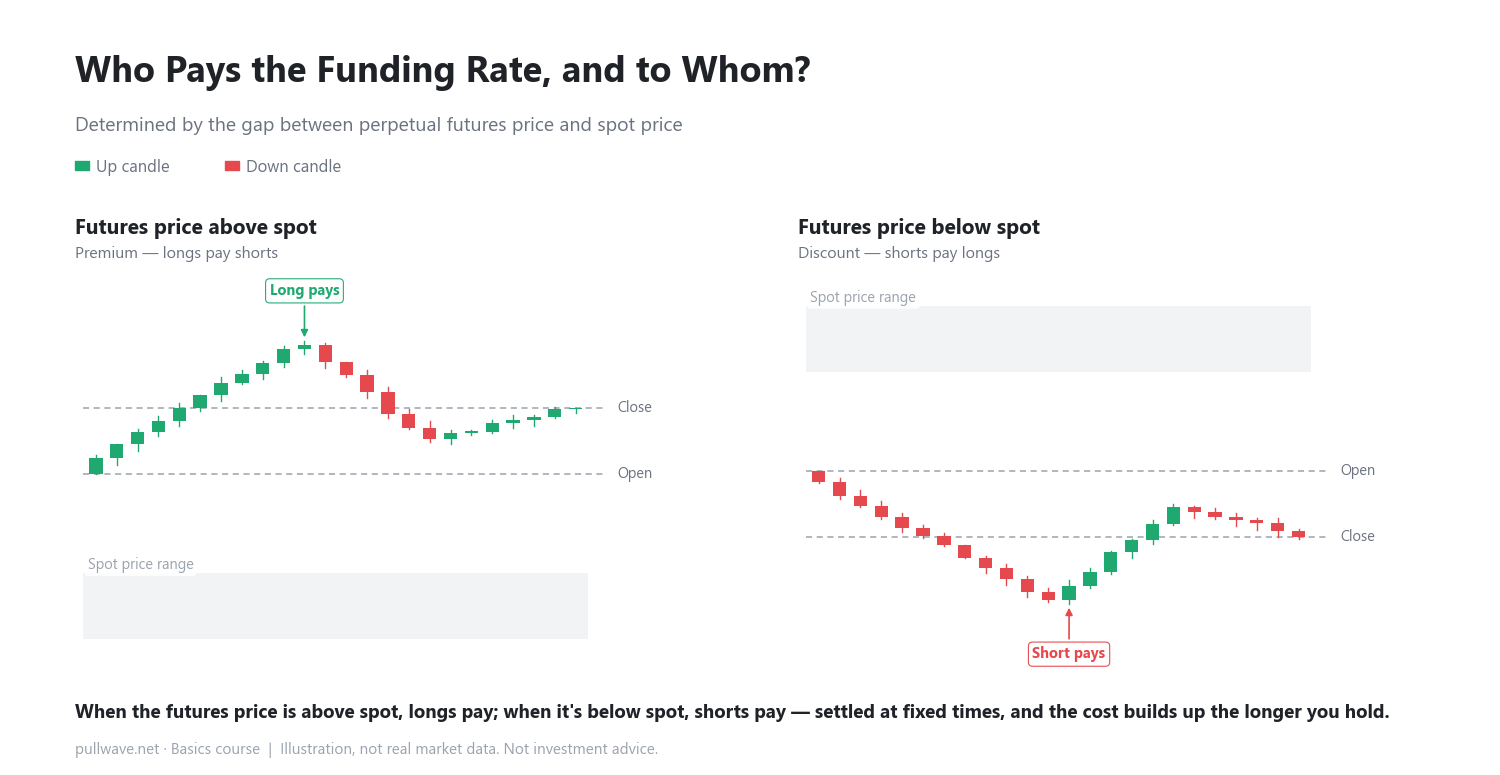
- When futures price is above spot, longs pay shorts
- When futures price is below spot, shorts pay longs
- Funding settles at fixed times and accumulates the longer you hold
In the previous lesson you learned that higher leverage brings your liquidation price closer to your entry price. Today we'll look at another cost that builds up the longer you hold a position: the funding rate. Perpetual futures contracts never expire, so their price can drift away from the spot price over time. The funding rate is the mechanism that keeps the two prices from drifting too far apart.
A perpetual futures contract is a futures contract with no expiration date. Normal futures converge to the spot price as they approach expiry, but perpetual contracts have no expiry, so they need another way to stay anchored to spot. That mechanism is the periodic funding payment exchanged between long and short traders at fixed times.
The core idea
Premium and discount
When the futures price trades above the spot price, that's called a premium. In this state, traders holding long positions pay traders holding short positions. When the futures price trades below spot, that's a discount, and shorts pay longs instead. In short: whichever side is in higher demand ends up paying the cost.
Settlement happens at fixed times
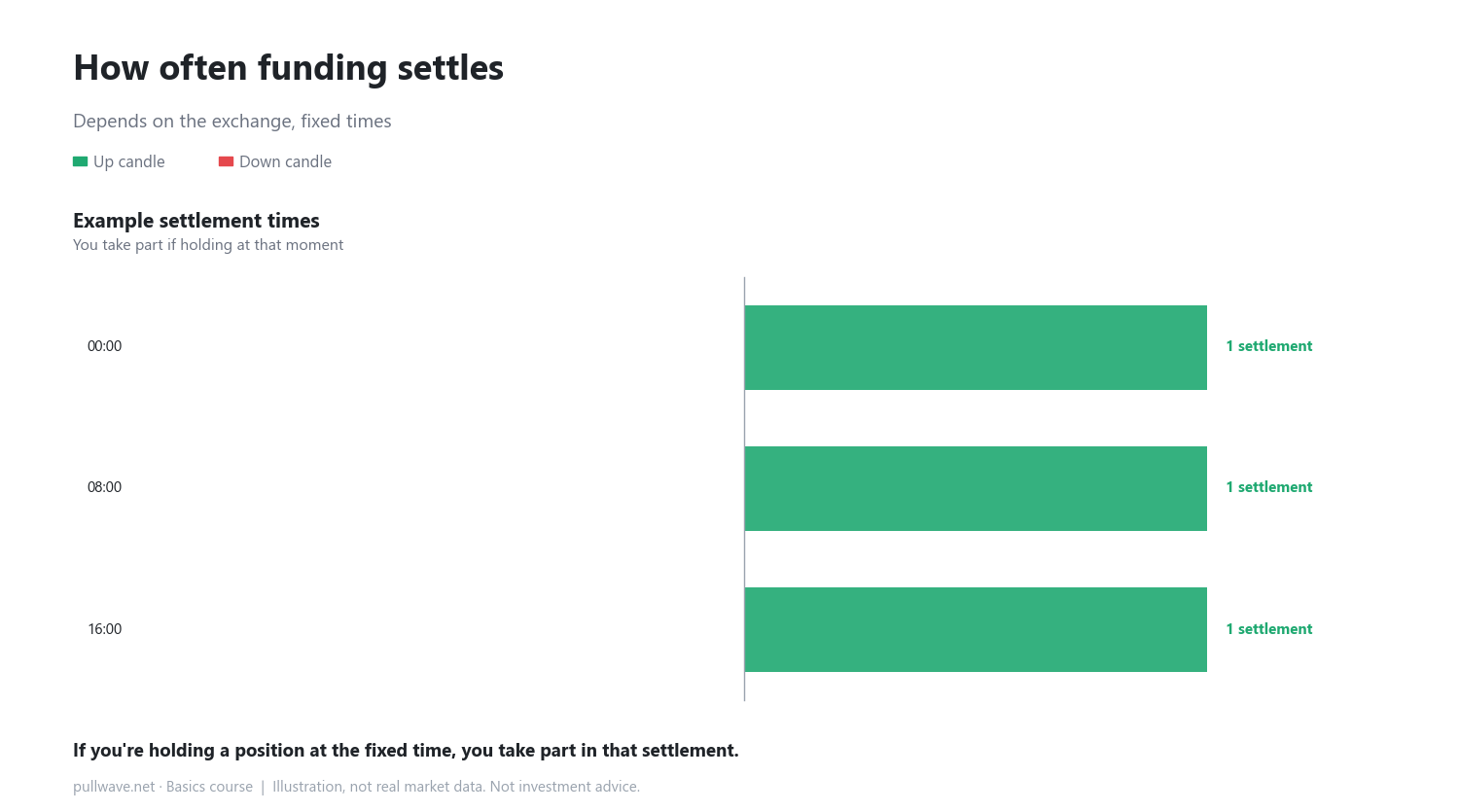
Funding isn't calculated continuously. It's settled a few times a day, at fixed times set by the exchange (for example 00:00, 08:00, and 16:00). Only traders holding a position at that exact moment take part in the exchange of payments. If you close your position right before settlement, you skip that round entirely.
A numeric example
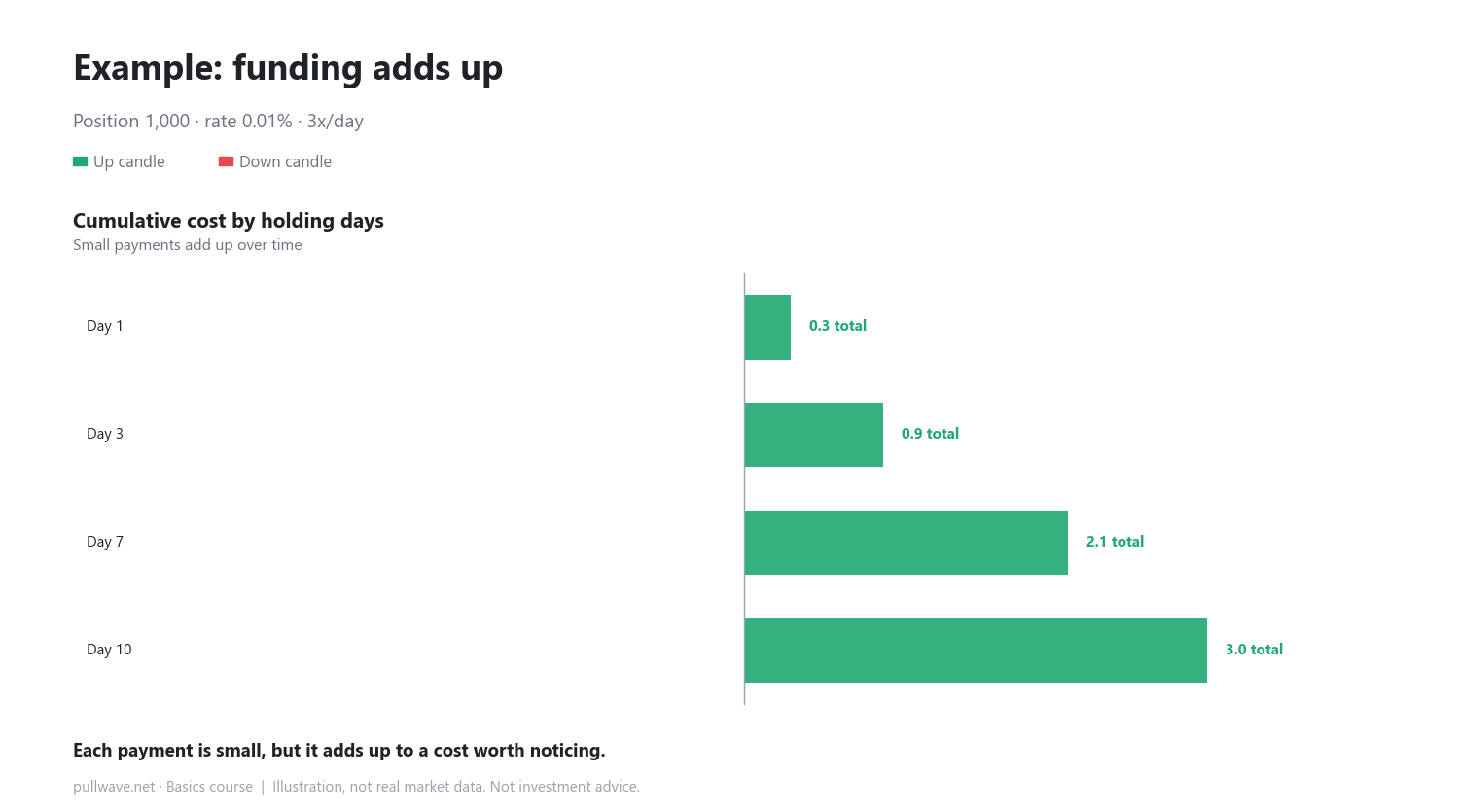
Say your position size is 1,000 and the funding rate for one settlement is 0.01%. The payment for a single settlement is 1,000 × 0.0001 = 0.1. If funding settles three times a day, your daily cost is about 0.3. Hold the position for 10 days and the accumulated cost is roughly 3. Each individual payment looks tiny, but holding a position for a long time can turn it into a cost worth planning for.
How to use it on a real chart
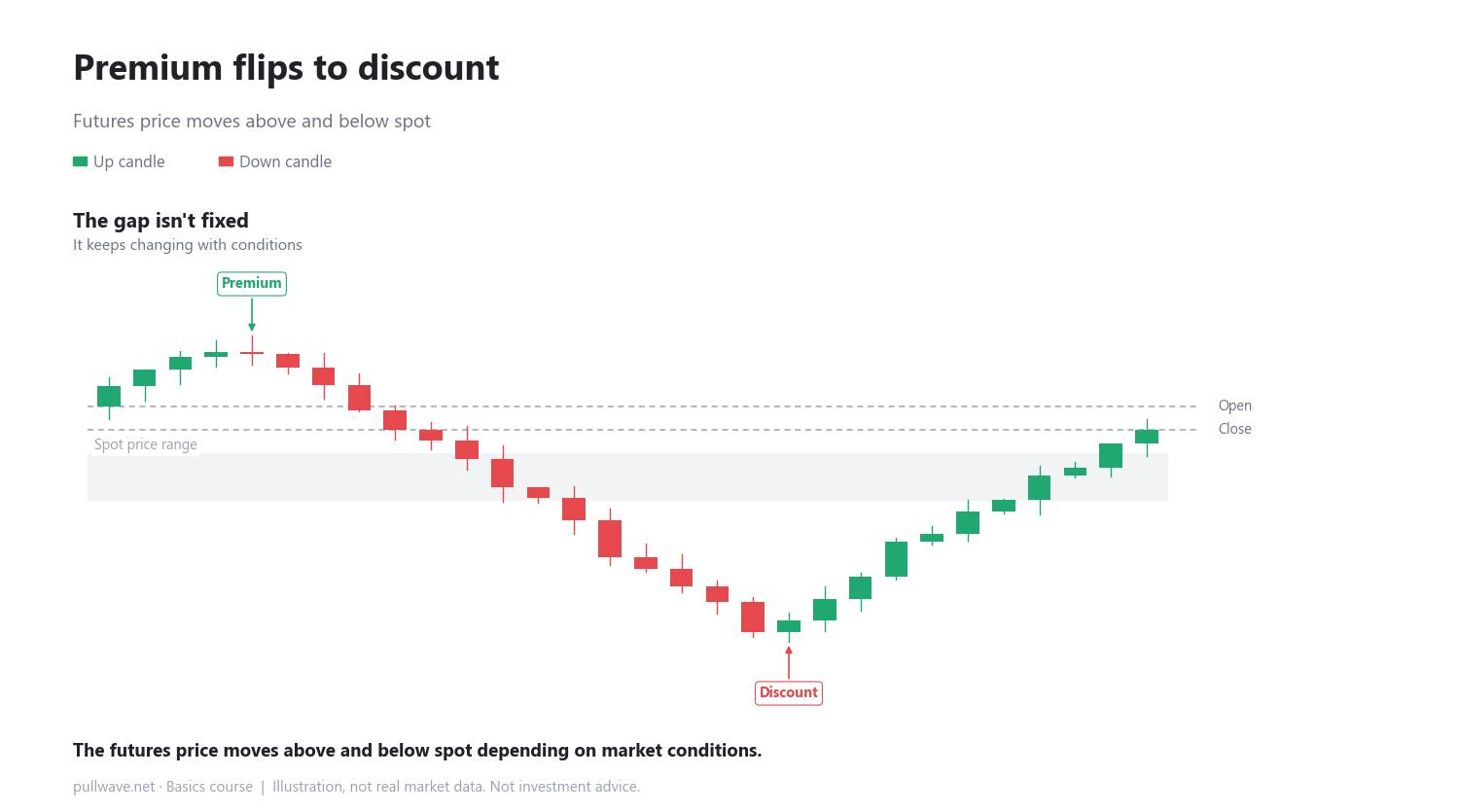
Most exchanges display the current funding rate for each perpetual contract. A positive rate means the market is in premium and longs are paying; a negative rate means it's in discount and shorts are paying. This rate changes constantly with market conditions — it isn't fixed in one direction. The futures price can move above and below spot repeatedly, flipping between premium and discount.
Common misconceptions
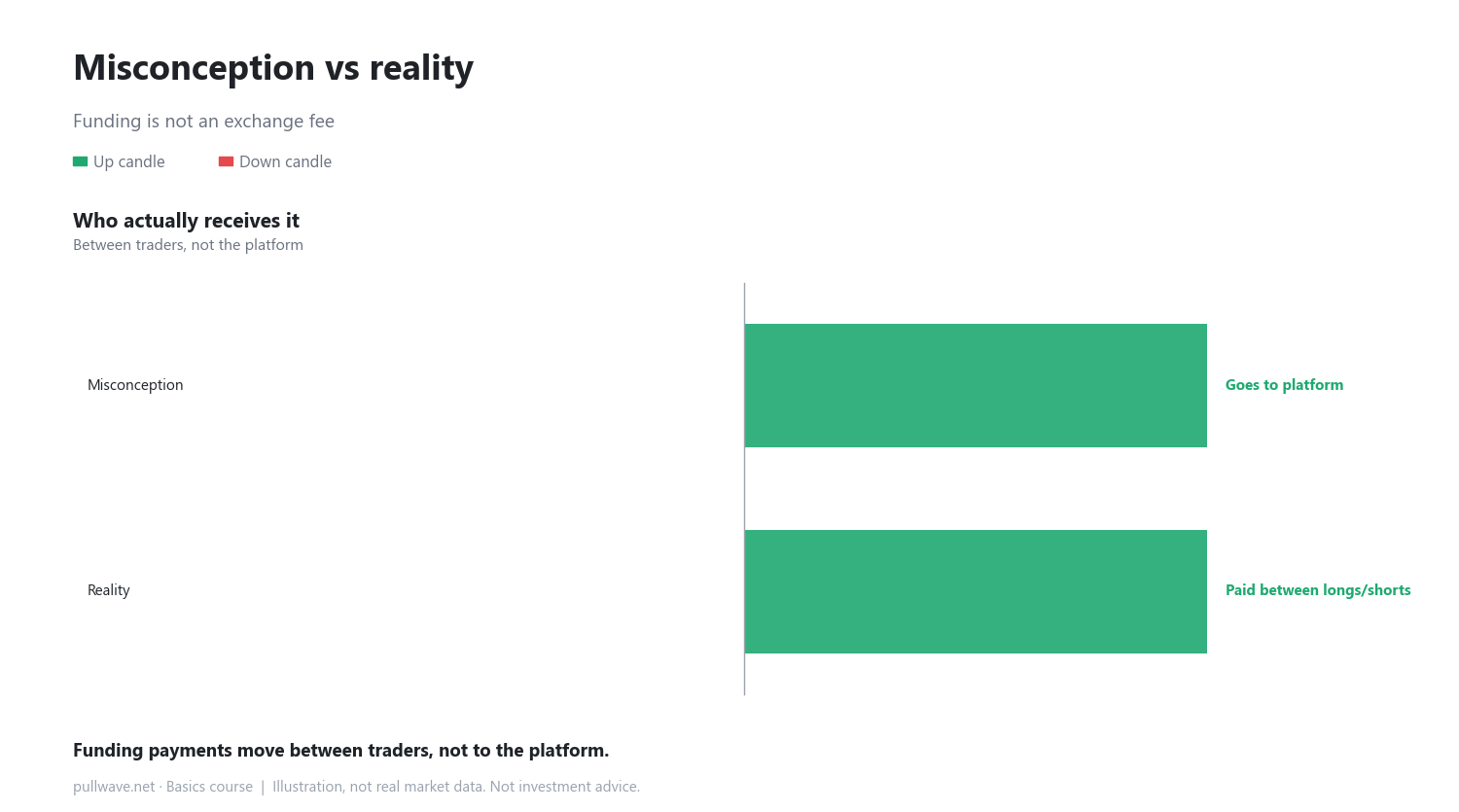
- Some people assume funding goes to the exchange as a fee. In reality, it's a payment exchanged directly between long and short traders — the exchange doesn't keep it.
- It's easy to assume shorts always benefit or longs always pay. The direction flips depending on market conditions; premium and discount are not fixed.
FAQ
How many times a day does funding settle?
It depends on the exchange, but it's usually a few fixed times per day. You only take part in a settlement if you're holding a position at that exact moment.
Can I avoid paying funding?
If you close your position before the settlement time, you skip that round's payment. But if your plan is to hold a position for a long time, it's better to treat funding as a normal holding cost and factor it into your plan from the start.
General education, not investment advice. The picture is an illustration, not real market data.